Bad News is “Good News”
There is something about delivering bad news crop reports that creates anxiety in me — despite being pretty direct and comfortable as a straightforward information shooter. I think it’s another case of my values being misaligned with parts of an industry that sometimes treats the withholding of information as a competitive advantage, rather than a tool for creating success for everyone. I don’t believe withholding helps anyone.
Transparency is a radical act in the produce business. Addressing bad news head-on reduces anxiety, builds trust, and opens the door to real problem-solving — for growers, buyers, and retailers alike. Avoidance does the opposite. It leaves everyone making decisions in the dark, and nobody wins from that.
The phrase “bad news is good news” exists for a reason. Negative information, delivered honestly, creates opportunity — to pivot, to plan, to build something better. In finance, weak economic data can spark optimism about falling interest rates. In agriculture, a hard crop report can be the thing that saves a retail program, a relationship, or a season.
So, despite my anxiety, here I am again this season delivering bad news. My hope and aim are in line with the above ethos: to shift perspective proactively — toward problem-solving, resilience, and how to capitalize on challenges rather than waiting to react. #MangoJoy is just as potent in one mango as millions after all.
Here is the news as I am able to unravel it today , some bad, some good, all reality— keep in mind it is extremely fluid. I will do my best to continue reporting in real time.
Ataulfos
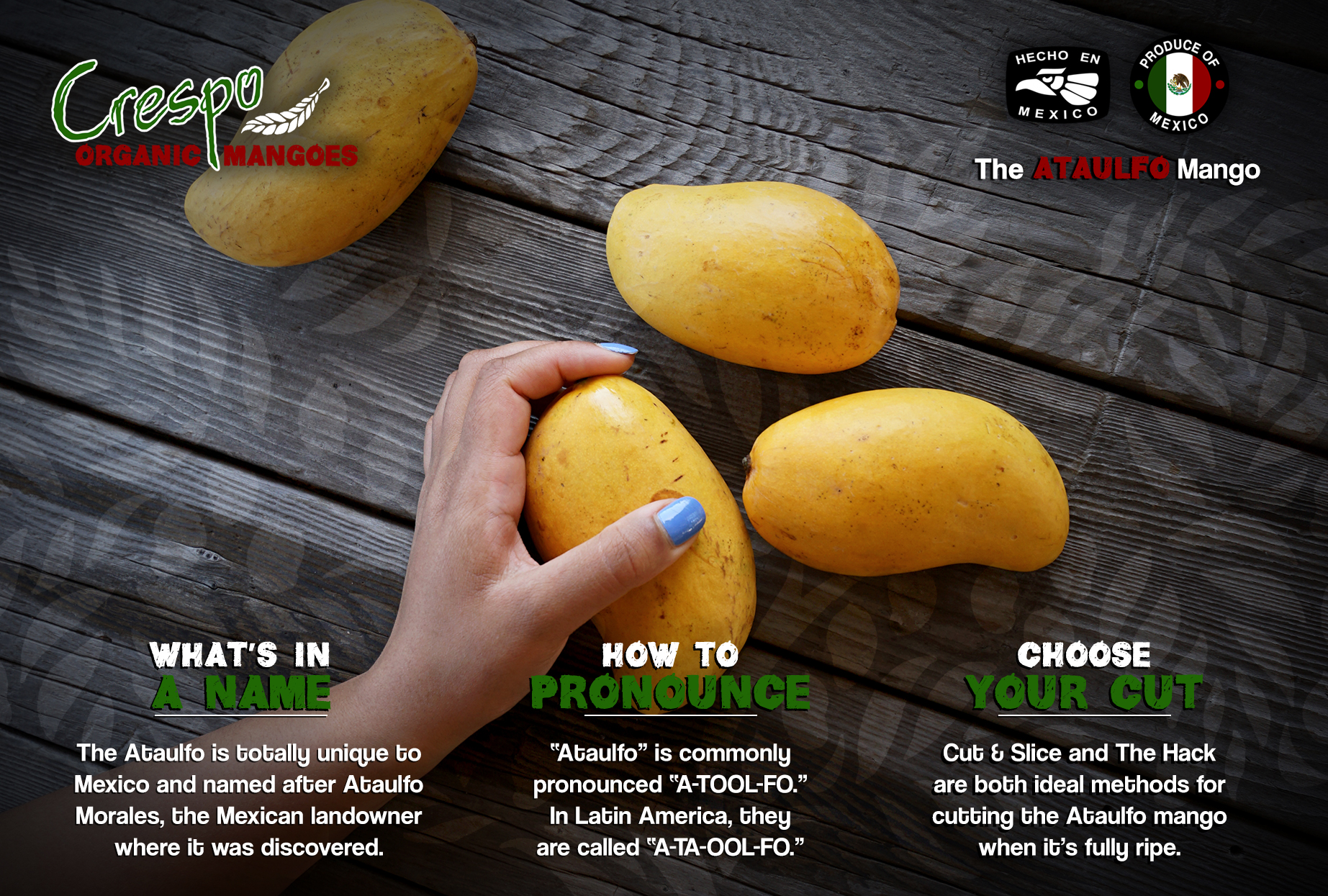
Ataulfo volumes remain stable and, despite the peak waning, we expect that to continue with decent sizing. There isn’t an endless supply, but there is enough, and pricing remains stable on the higher side.
Quality-wise, maturities are more mixed as we move into the final weeks of the crop and the hottest months. And yes — forget about that fluke of the super ripe ones. I missed one hot truck arrival after Easter. I’m allowed to make a mistake, aren’t I? Thank you to the customers who pushed them through despite my error. Overall quality remains good and the flavor is off the charts — make my Mango Tiramisu if you don’t believe me.
Tommy Atkins
The current challenge is reduced Tommy volumes stemming from the flowering issues reported early on — some weather-related, some due to thrips, all flagged as a potential problem from the start. In some of these gaps it’s not that there’s no fruit, it’s that suddenly mature-enough-to-pick fruit is limited. That’s exactly where we are, and we expect gaps and limitations to continue for a few more weeks until volumes are expected to flow more freely. Prices are up in line with supply. Sizing remains pretty broad and quality is decent.
Quality & Pests ( Fruit Fly)
This is something we touched on before, but I think it’s been amplified by the overall supply shortage. We talked a lot about pest pressures throughout the season — widely reported across nearly every crop in Mexico — but fruit fly and fruit fly larvae in mangoes is a more complex issue and growers are reporting more issues that are hindering flow.
The hot water bath treatment exists precisely for fruit fly and fruit fly larvae, there are strict rules around what can even enter a USDA APHIS-approved mango packhouse. Anything with visible fruit fly or larvae gets rejected before it enters — meaning fruit that was destined to be packed goes to local markets instead. Suddenly a packer who was already behind from Easter, and already behind due to lack of orchard volume, is way behind. This is happening across southern Mexico, and while I don’t yet have clarity on whether it will be an issue in the north, I have to assume the pest pressures everyone is facing up there will show up in mangoes as well.
If you want a better sense of what I’m describing, check out this video of Our Process. Crespo Organic lays out the six steps that occur in less than 72 hours — with 24 of those hours dedicated to cooling — it shows exactly how mangoes are inspected before they even enter the process.
Mango Queen Specialty Mangoes
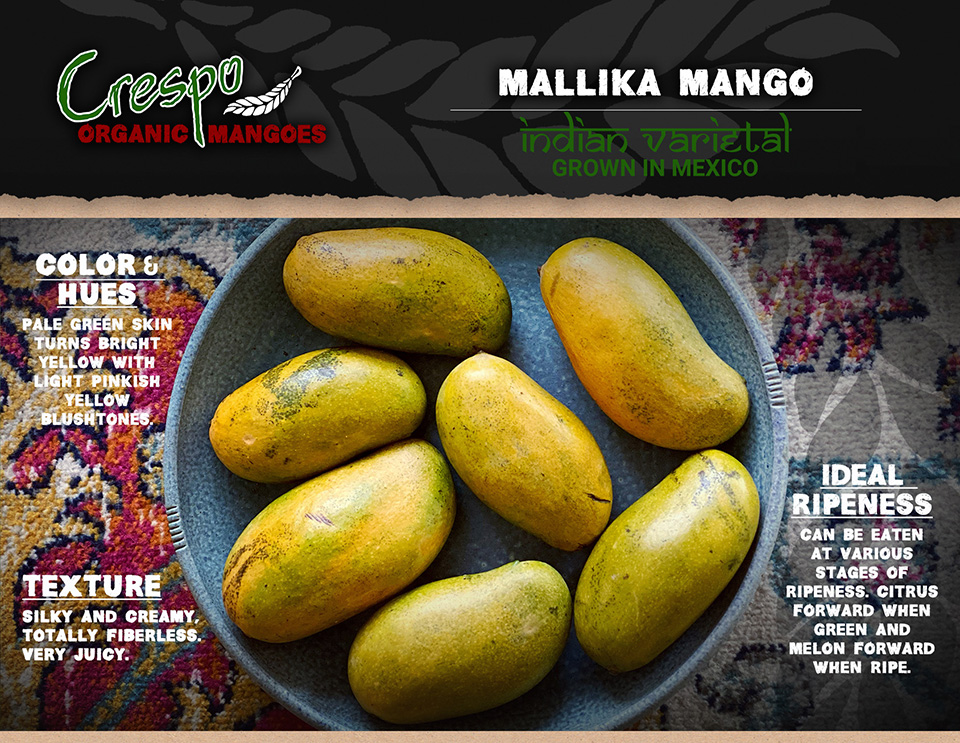
Here is a pop of color in the midst of some of the bleak. In about 12 days we will get a small window of our Mango Queen specialty mangoes. Mallika and Nam Doc Mai will arrive with a bright burst of creamy decadence, dressed in their opulent tags filled with consumer insight and the Crespo signature — #MangoEd that makes #MangoJoy an easier practice. Volume will be limited, with first priority going to those who helped launch these varietals and those who buy the full offering from season end to season beginning.
Mango Queen, our organic sub-brand, is the Crespo answer to the CV Mango King — named in memory of RCF Distributors’ legendary specialty mango salesman Alan Alvarez. Built on Roberto Crespo Fitch and his son Jorge Crespo’s long-standing dedication to specialty varietals and expanding beyond the ordinary, and born from decades of global growing experience, consumer feedback, and our own market research, it redefines varietal and packaging standards with one luxe brand. Our goal is simple: raise the bar on biodiversity and flavor diversity on the growing side, and deliver culinary and product education to consumers in a way that actually accelerates #MangoJoy
Oaxaca in General
Despite being past peak, Oaxaca is proving to be a needed powerhouse in bridging what will be an inevitable gap. The season is extended beyond the norm and quality, while not at its best, is holding strong — and more importantly, tasting great. Tommy is currently gapping out of Oaxaca, so most of the CV fruit right now is coming from Michoacán, which has barely any organic volume these days. In a few weeks that Oaxaca gap repairs, and weather and seasonal rains permitting, we go strong through the end of the regions season — currently expected to end around May 20th.
Nayarit (June Gloom)
June Gloom — that overcast, sunless stretch that settles and refuses to lift — is the best way I can describe what is predicted to be the Nayarit mango season. The first arriving northern powerhouse, Nayarit usually transitions from the south around early to mid-May, but it is late and reporting significantly less fruit than normal. A lot of people are even using the word “none,” which doesn’t quite make sense to me — but either way, little to none is something I haven’t experienced in my time in mangoes, and I think everyone is equally perplexed, the news is beyond bleak..
The blooming rumors I reported back in early March were indeed true, especially for Nayarit. This will be a pretty catastrophic month for an industry that relies on Nayarit’s mass volume to start the long norther region momentum and fill the insatiable and growing appetite of the American consumer — who is buying an increasingly astonishing amount of mangoes, especially in peak summer months. I am still gathering the details of what this bleak month will look like, but it is important to be clear: everyone expects it to be a devastating stretch for all of us.
The main driver, again, was a flowering failure caused by a warm winter. Mango trees depend on sustained cool nights, and that cold never came — so they pushed branches and leaves instead of flowers.

Sinaloa (Summer Mango Mania)
Back in March we reported that Sinaloa did get a last-minute stretch of cool nights, triggering a lot of late-stage blooming just in time. The season will be late, and without the bridge of the Nayarit season it’s too early to call volumes — but it is definitely not the situation Nayarit is facing. There are still a lot of variables in play. Security threats in Sinaloa are pressurizing the situation further — politics, logistics, you name it. I can’t say much more than that, but the outlook is complicated and not ideal. We’ll need to work week by week to gain clarity.
July is the month where more mangoes are expected to arrive — which, as it happens, aligns with our Summer Mango Mania. The show goes on, and we will get creative making the most #MangoJoy out of what may be a limited mango season.
