Dried: Damaging Orchard Prices
This is a brief update on the organic dried mango sector in Mexico’s norther regions. I will produce the latest fresh update by Monday.
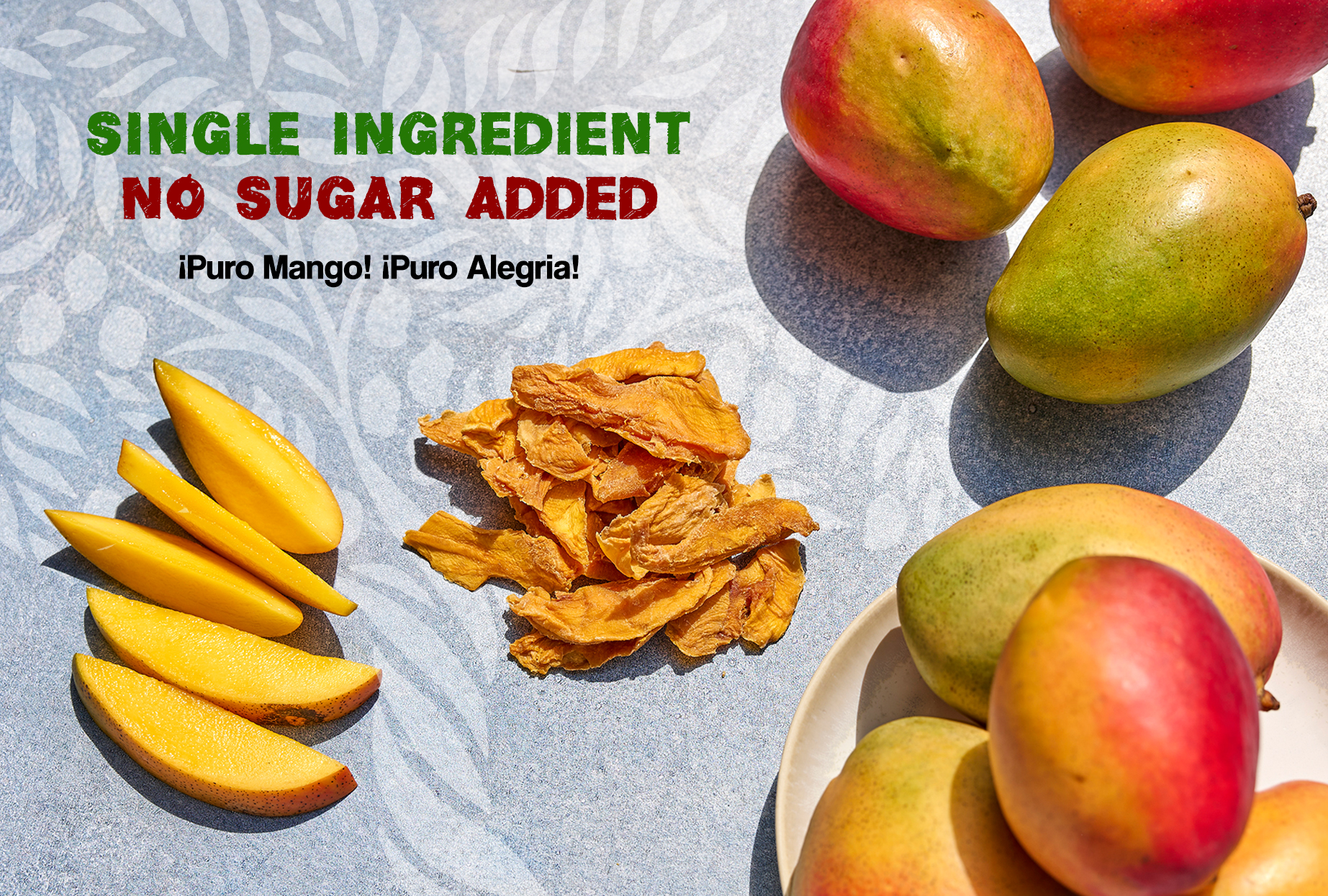
We are all aware by now that organic dried mango is no longer a niche product. Over the past several years, it has become one of the fastest-growing segments in snacking as consumers continue shifting toward clean-label, single-ingredient foods. As an ingredient, it is strongly associated with sweetness, health and what I like to call “Mango Joy”—a rare combination that resonates deeply with consumers. The growth trajectory and future potential for organic dried mango are enormous, as it sits at the intersection of several powerful trends: organic, plant-based, minimally processed and convenient snacking.
The dried mango industry will be significantly affected by this season’s reduced fruit volumes in Nayarit and Sinaloa. The effects of a difficult crop year have the potential to ripple through an entire industry that many CPG brands now depend on, making the dried sector one of the most important stories that few people are talking about this season.
For those who haven’t been following my fresh crop reports, the bloom failures in Nayarit and Sinaloa were severe. An unusually hot season disrupted normal flowering, leaving orchards with significantly reduced fruit and creating one of the smallest crops seen in memory. The Kent and Keitt were especially hard hit and as these are the main varieties used in the dried and IQF sectors, the industry will be hard hit.
What has largely been reported as a fresh market problem is, in reality, a serious industry-wide issue, as the fresh, dried, IQF and local markets are all competing for the same dramatically reduced supply of fruit. Now that both the Nayarit and Sinaloa crops are underway, we are beginning to see how these dynamics are playing out at the orchard level.
I have spent the last several weeks focused on the realities of the fresh sector, but as our drying season begins—albeit much later than normal—it is becoming increasingly clear that the impacts extend far beyond fresh mangoes. The dried and IQF sectors are facing significant challenges that have largely gone unnoticed by the “masses”, despite their growing importance and dependence on a stable supply of fruit. These realities in the dried and IQF sector also show me just how volatile the fresh side is.

The processing industries in Mexico, much like those in Peru and Burkina Faso, were built alongside the growth of the fresh sector—the two go hand in hand. As we enter the next several months of both the fresh and dried seasons, it is important to recognize that this year’s challenges have the potential to test everything that has been built thus far. These abnormal climate patterns are threatening years of progress across all sectors and, in my opinion, exposing a critical vulnerability: the entire industry has become dependent on a stable and abundant supply of fruit. As fresh exports expanded, dried, IQF and CPG industries grew alongside them, creating an interconnected system where every sector now relies on the same crop. When a season like this occurs, the consequences are no longer isolated to fresh mangoes—they cascade throughout the entire supply chain, exposing just how fragile years of growth and investment actually are.
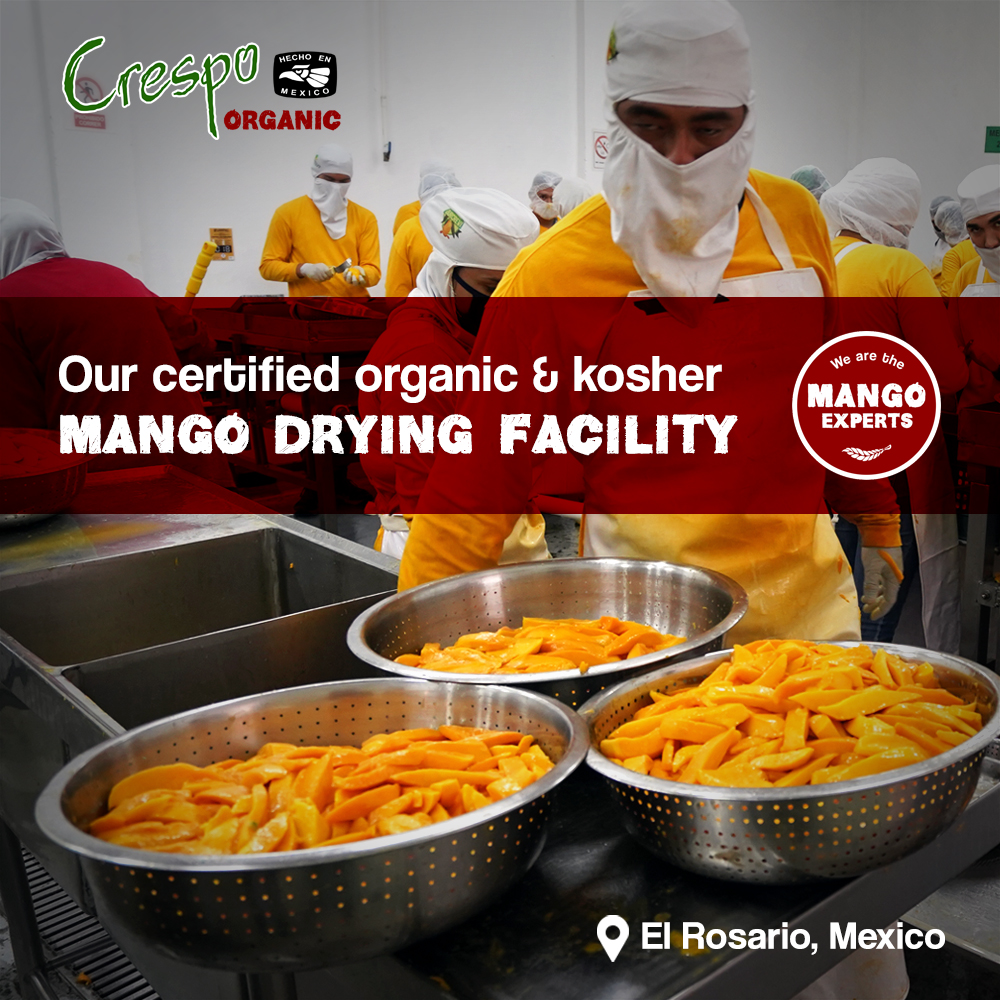
This crop report focuses specifically on what I know about the Escuinapa and Rosario subregions in Sinaloa, where much of Mexico’s organic dried mango production takes place—and where all of Crespo Organic’s production occurs. The reality in these parts is stark: many facilities simply will not open this year. The problem isn’t just that there isn’t much fruit. It’s that fruit that may exist isn’t at a price point that makes drying economically possible.
Unlike the fresh sector, dried mango processors operate within very fixed economics. Historically, due to the soaring demand of mangoes in general, there has been enough fruit for dehydrators to buy directly from orchards at a certain peso-per-pound price that allows them to open their doors and operate profitably. This year, that price point is nowhere close to reality.
It is also important to understand that, for many of the larger operations, fresh and dried are not separate businesses—they are deeply integrated. Most large packhouses operate with orchards that are partially designated for fresh and partially for dried production, selecting the highest grades for export while allocating #2 fruit and all of the cleanout from fresh packing lines to their drying facilities. Many operate with a mix of company-owned orchards and purchased fruit, creating a supply strategy designed to ensure both fruit availability and economic viability.
Smaller drying operations, however, are much more dependent on purchasing fruit outright or relying heavily on secondary grades and leftovers from the fresh sector. In a year like this, those economics quickly collapse. When fruit becomes scarce and prices rise, dehydrators cannot simply pay more. The fruit is worth significantly more in the fresh and local markets, leaving many drying facilities without enough affordable supply to justify opening their doors at all.
The economic challenges extend beyond the processor. Many CPG brands have built entire product lines around the assumption of a dependable, year-round supply of organic dried mango at relatively stable prices. But these brands cannot simply absorb unlimited increases in raw material costs and pass them directly on to consumers. They operate within tight margin structures, fixed retail pricing expectations and highly competitive shelf environments where significant price increases are not always possible. When ingredient costs rise too dramatically, brands are often forced to make difficult decisions—reducing promotions, limiting product offerings, reformulating recipes or, in some cases, stepping away from products altogether. What may begin as a crop shortage in Mexico can ultimately reshape what consumers see on shelves months later.
What we are seeing play out as fresh, dried and IQF processors are all competing for dramatically fewer mangoes. is completely chaotic. Traditionally, during times of constrained supply, processors rely heavily on RESAGO (the cleanout fruit from fresh packhouses). But this season, those mangoes are fetching high prices in local markets—far above what dehydrators can afford to pay. Mexico’s local market demand is robust, rightly so, this is their fruit after all.
Some of the larger packhouses, as I described can be somewhat better off, but the term somewhat needs to be highlighted here, there is not a lot fruit moving through the packhouses right now either.
Many of the dried plants that have opened are essentially waiting for the fresh sector to feed them fruit, and production has been much slower than usual. Most are still drying Ataulfos as the Kent season just begins, but Ataulfo fruit has also been extraordinarily expensive this year. More importantly, because fresh volumes have been delayed and overall supplies remain so low, there simply has not been enough fruit flowing through the system to supply the drying facilities.
Most medium and large packhouses estimate they will only achieve 50-60% of normal volumes this season, but even those estimates come with a large disclaimer: nobody is entirely sure what is possible anymore. This mirrors everything we have been reporting on the fresh sector in general, the unknown and the unpredictable is the real shadow of the season, of climate change.
There are roughly 40-50 packhouses operating in this region, mostly small and medium-sized operations, along with only four or five large ones, including our facilities. Most of the smaller facilities, and many medium-sized ones, will not open at all this year because the economics simply do not work.
This will create an enormous deficit and a ripple effect that could alter the dynamics of the entire category, including the future availability of dried mangoes and dried mango products on CPG shelves. This is an enormous and largely overlooked situation as I see it.

The majority of organic dried mangoes ultimately end up in CPG products, whether as single-ingredient snacks or ingredients within other products. Shortages at the processing level have the potential to create ripple effects much further downstream than many realize.
Organic dried mango has been posting consistent double-digit growth for years as consumers continue to embrace clean-label, single-ingredient foods. Consumers are quite literally gobbling these products up, and many CPG brands have built entire product lines around dependable organic dried mango supply.
The ramifications of a season like this are difficult to calculate.