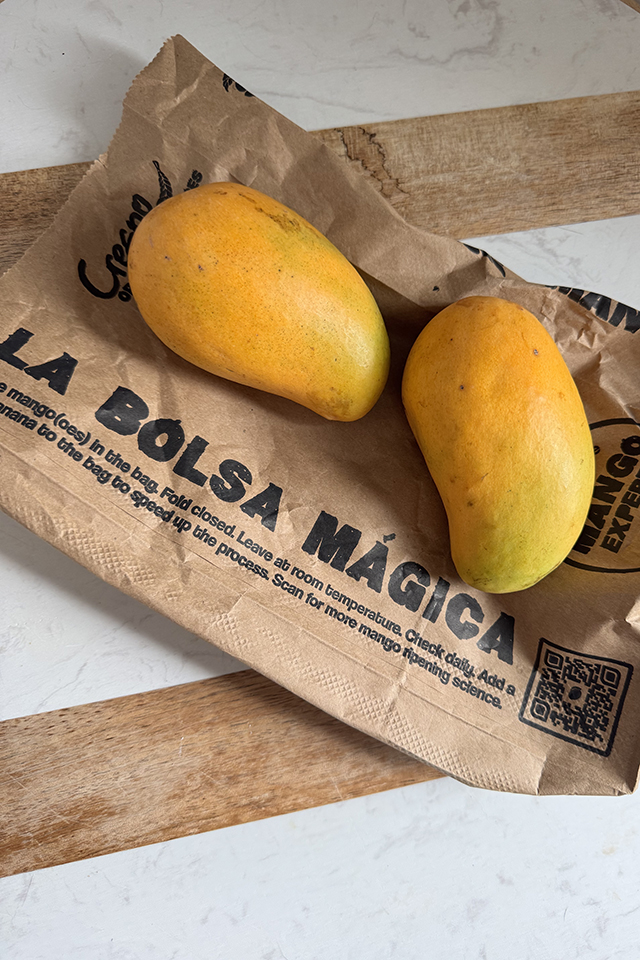
Ataulfo + Cold Trucks = Bad.
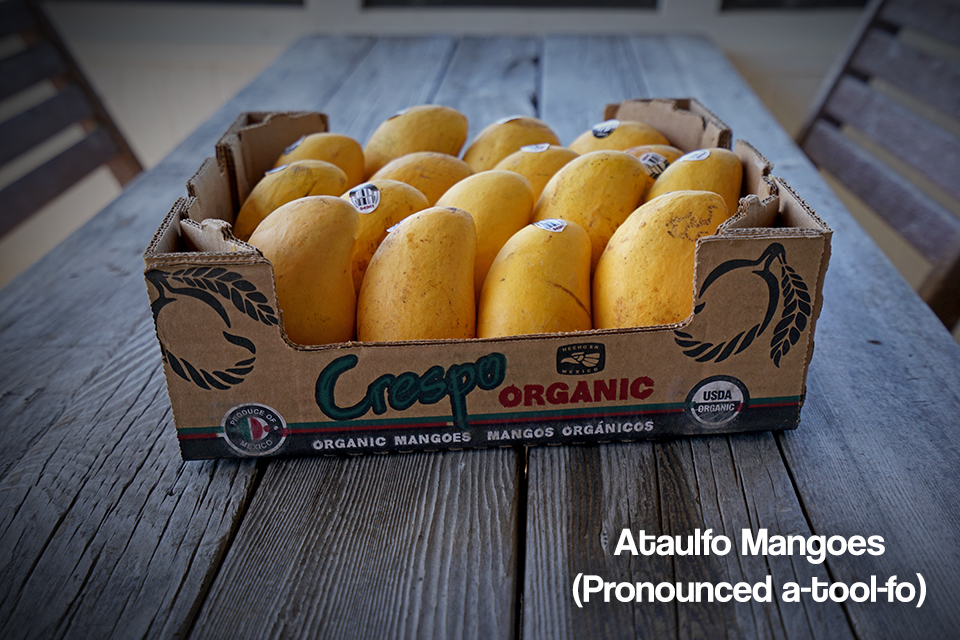
Period.
Ataulfos need a temperature between 50–55°F for optimal success. Below that, Brix drops, acidity rises, and a cascade of physiological problems begins—many of which we’re seeing play out en masse this particularly challenging season. A mixed-load mentality and 45°F trucks will never build robust Ataulfo programs capable of consistently delivering exceptional flavor, clean skin, and the eating quality consumers expect. They will also never create the quality, consistency, or economics needed to achieve the price points required to move meaningful volume and continue growing the category. The purpose of the cold chain is to preserve the fruit’s potential, not consume it. Every unnecessary degree below Ataulfo’s recommended temperature works against exceptional eating experiences, repeat purchases, consumer confidence, category growth—and ultimately depletes #MangoJoy.
When I first started working in produce, warm trucks and cold trucks were much more clearly defined. Tomatoes and peppers — two commodities I worked with early in my career — along with other warm commodities like mangoes, traveled together around 50–55°F, while colder items moved in separate trucks at 34–38°F. Today, the produce supply chain, like the world itself, has veered from what we know works for specific commodities to what works most efficiently for the middleman and the logistics side of the chain. A warm truck today is drastically different from the 50–55°F of my yesteryears, and the irony is that this isn’t due to some innovative advancement in moving multi-temperature/humidity products — it’s simply because that’s what makes the most economic sense for one specific part of the chain. A warm truck today runs at 45°F and is considered “warm” only because it’s a compromise created by mixed LTL loads — not because it’s the ideal temperature for any of the warm commodities inside.
I believe the breakdown in our industry’s economics has historically been one of the biggest obstacles. The companies making LTL transportation and temperature decisions are rarely the ones paying for the consequences. When cold (or warm) truck temperatures damage fruit, the financial losses are routinely pushed back onto the farmer through quality claims and credits. Meanwhile, consumers receive lower-quality fruit while often paying higher prices because the entire supply chain ends up absorbing the cost of prioritizing transportation efficiency over fruit quality.
As long as the industry can shift those costs downstream, there is little incentive to treat temperature management as the serious issue it is. I certainly don’t have clear answers currently, but I imagine more innovation and creative thinking as well as admitting we have a problem is key.
Over the last decade, Mexico’s role as a supplier of fresh produce to the United States has expanded dramatically—not only in volume, but in the diversity of crops being grown and shipped north. Alongside traditional exports like tomatoes, peppers, cucumbers, avocados, and mangoes, Mexico has seen major growth in berries, Brussels sprouts, and other highly temperature-sensitive commodities requiring much colder handling conditions. At the same time, many of these products also require very high humidity environments to maintain freshness, creating additional complexity inside mixed-load transportation.
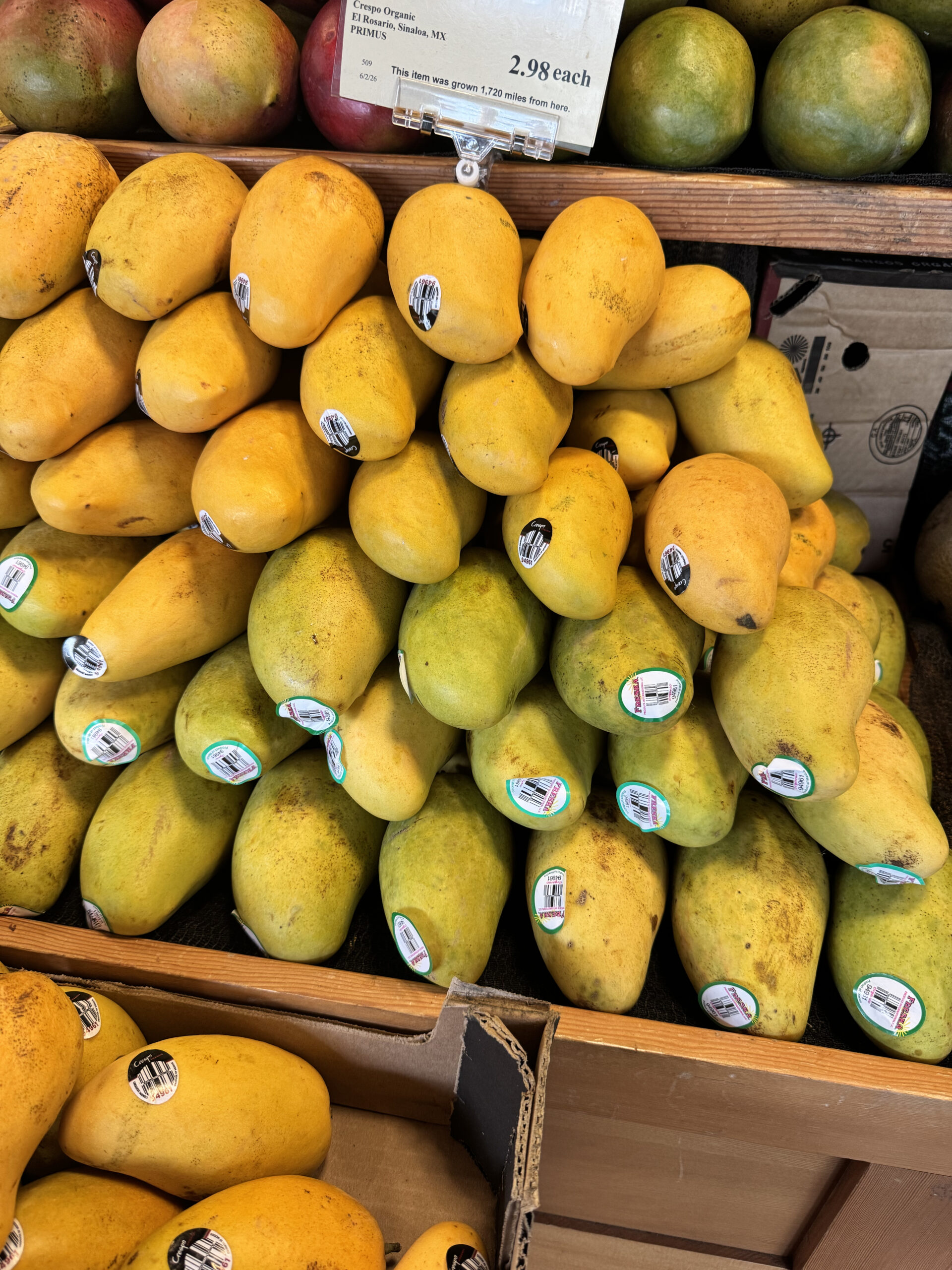
As more commodities with different temperature and humidity requirements entered the export supply chain, logistics evolved toward greater consolidation and mixed-load transportation, especially for smaller and specialty programs like organic ones. The result is a more complex cold chain where trailer conditions are increasingly influenced by the needs of the highest-priority commodities on the load—often those with the greatest economic value, strictest customer requirements, or highest risk of immediate loss—rather than the specific physiological needs of every commodity inside. Add to that the increasingly automated and algorithm-driven nature of transportation logistics, where temperature settings are often determined by standardized load parameters rather than a deeper evaluation of the actual trucks.
The result is a system built for efficiency and consolidation, but one that leaves less room for commodities with specific biological requirements. This is where Ataulfo becomes especially vulnerable. The fruit’s biology has not changed; its needs have always been 50–55°F. But this season it entered the supply chain with less physiological reserve and a reduced ability to tolerate additional stress. Across Mexico, growers faced extreme heat, erratic weather patterns, and challenging growing conditions that placed additional pressure on crops before they ever entered the post-harvest chain.
In the case of Ataulfos, extreme orchard heat and environmental stress have elevated respiration, depleted energy reserves, and reduced the fruit’s natural resilience, which is much less than the round fruit. In a normal season, Ataulfos may have enough physiological reserve to tolerate minor handling challenges. This is not a normal season. The same stresses that affected bloom and fruit development in the orchard have made transportation conditions outside the recommended range far more damaging.
That means the margin for error during transportation is essentially gone. Moving Ataulfos through cold LTL shipments—often alongside colder, high-humidity commodities—places additional stress on fruit that is already physiologically compromised. Excess moisture from surrounding produce can further increase humidity around the mangoes particularly on the skin, slowing surface drying and compounding cold stress.
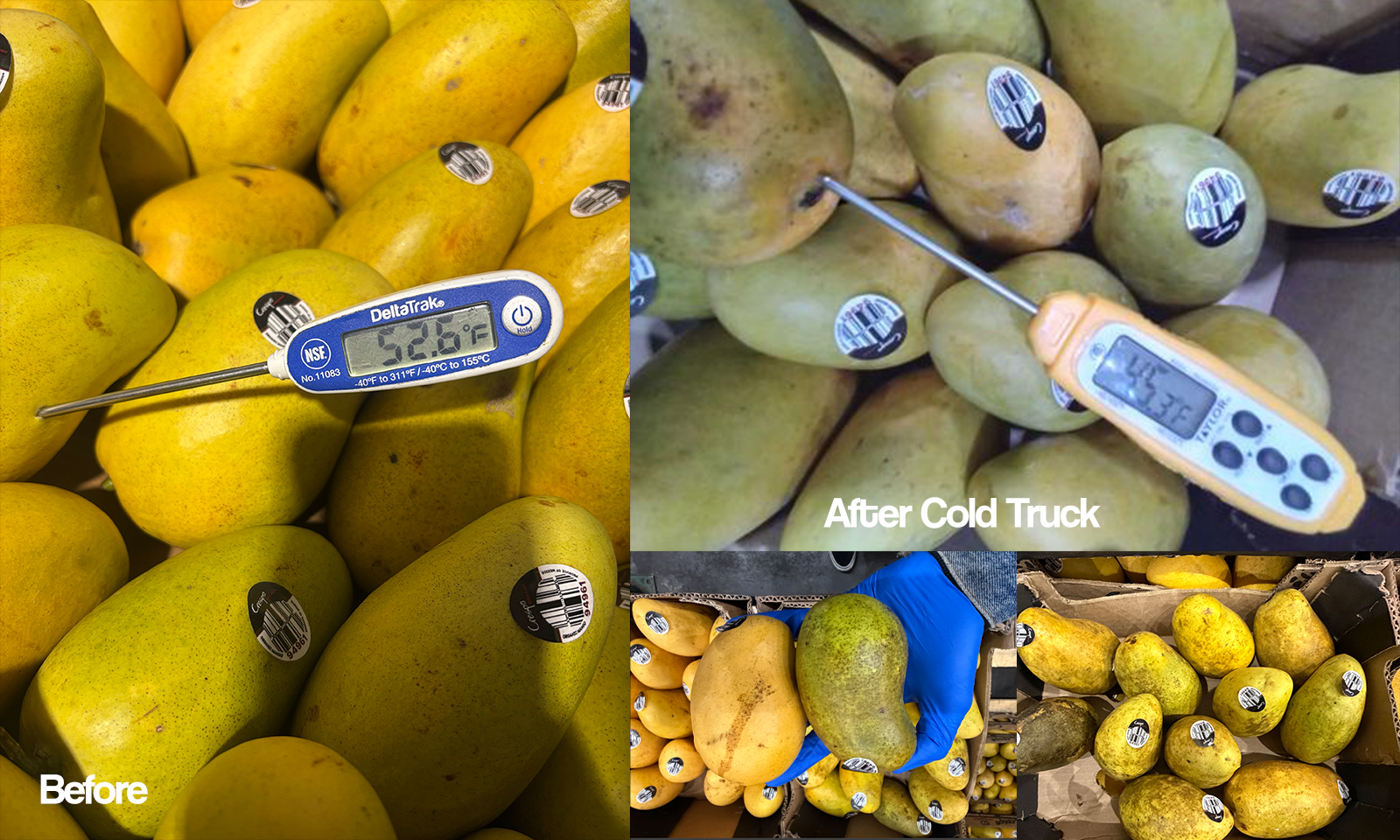
This exposure outside the recommended temperature range is triggering and exacerbating lenticel spotting, skin staining, pitting, blotchy color development, and premature cosmetic aging—leaving edible fruit looking older and lower quality than it actually is.
The Ataulfo category has not grown by accident. Years of work from growers, importers, retailers, and educators have helped consumers understand that this is not just another mango—it is a unique varietal with exceptional flavor, texture, and eating quality. Especially in the organic market, educated consumers have supported the Ataulfo mango and continue seeking other authentic varieties and better eating experiences.
As a seller of mangoes for over 18 years now, I have seen Ataulfos explode in popularity especially in the organic sector and I have also seen a consistent pattern between Ataulfos and cold exposure. The programs grow and every season the cold chain is getting colder, more corners are cut.
My goal here is not simply to highlight a problem, but to explain the science behind why this is happening. The biology of Ataulfo is not going to change, and this season it has less ability to tolerate additional stress. Understanding its physiology is perhaps the first step toward conversations toward improvement.
The Problem
The cold truck problem is largely an organic (and small/medium wholesaler) supply chain problem. Unlike conventional programs or large retail accounts that can fill entire trailers with mangoes or other warm-temperature commodities, organic programs often rely on LTL (less-than-truckload) shipments. During border consolidation, these shipments are combined with other commodities to maximize trailer utilization, frequently creating mixed loads with very different temperature and humidity requirements.
Ataulfos are commonly transported alongside tomatoes, Brussels sprouts, eggplants, avocados, grapes, cucumbers, and other commodities with very different handling requirements. Trailer temperatures are often set around 45°F based on mixed load mentality, and temperature data shows these shipments can regularly dip into the high 30s. While this may be an efficient logistics model, it creates an environment that is fundamentally incompatible with Ataulfo physiology and quality success.
The LTL system exists because it is the most economical way to move smaller volumes—not because it provides the right environment for Ataulfos. Economics do not change fruit physiology. Every shipment below the recommended temperature range increases the risk of chilling injury, visible skin defects like lenticel darkening, bronzing, staining, pitting, blotchy color development, and premature cosmetic aging, an overall reduced eating quality, and unnecessary losses throughout the supply chain.
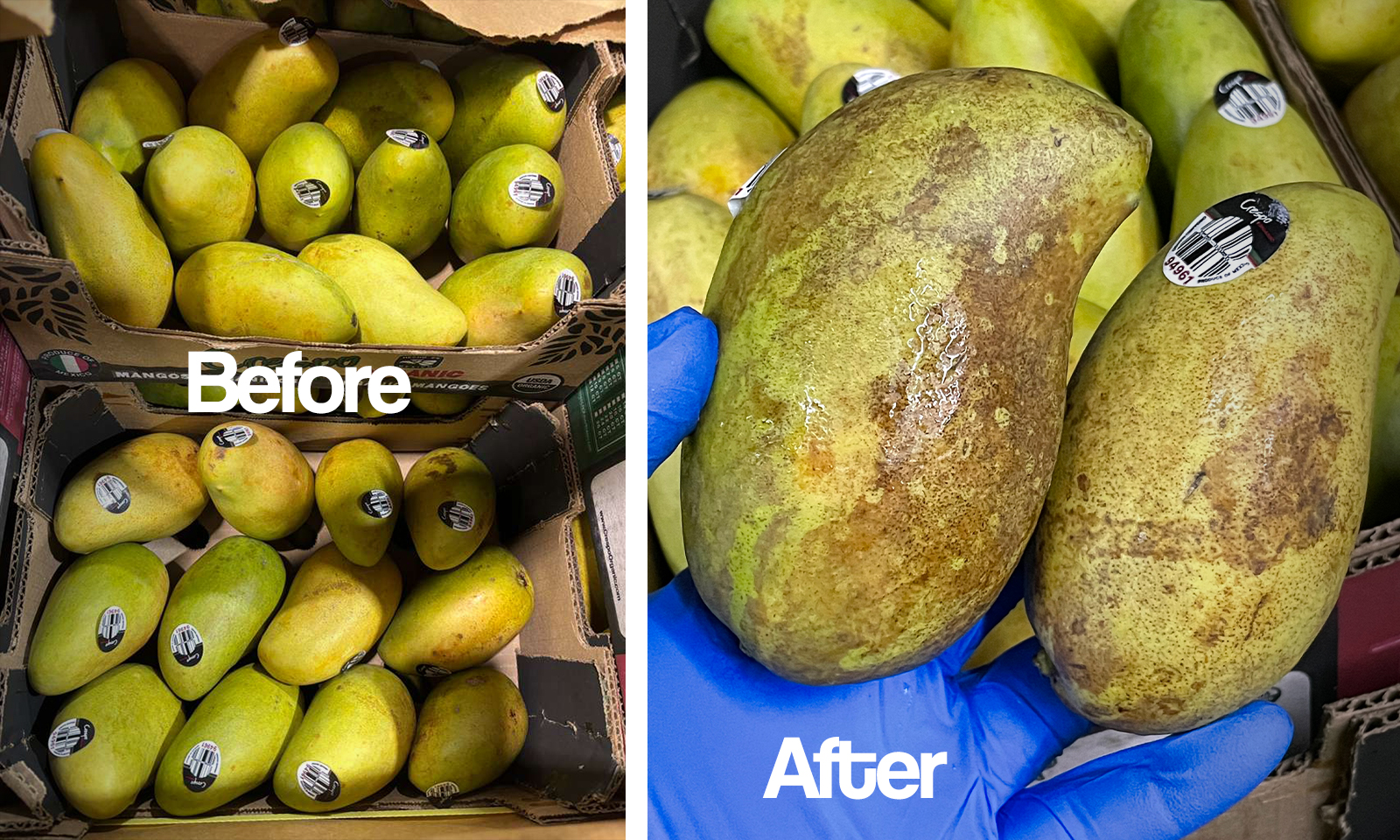
Cold Temperature & Condensation
Ataulfo mangoes are living, actively respiring fruit. Even after harvest they continue producing heat and releasing water vapor. This season, extreme orchard heat, accelerated maturity, and the naturally more advanced fruit typical of the late season have left Ataulfos entering the supply chain with higher respiration rates and greater field heat than normal. When this warmer, more metabolically active fruit is placed into an excessively cold trailer, the surrounding air cools rapidly and reaches its dew point more quickly, causing moisture to condense on the fruits skin, cartons, and packaging. The greater the temperature difference between the fruit and the trailer, the greater the potential for condensation. This is why transport at 45°F generally creates a much wetter environment than transport within Ataulfo’s recommended 50–55°F range.
High-Humidity Mixed Loads
Many commodities commonly transported on mixed LTL loads—including Brussels sprouts, cauliflower, broccoli, herbs, green onions, and cucumbers—contain very high amounts of water and continuously release moisture through transpiration. Some may also enter the trailer carrying surface moisture from washing or hydrocooling. When these high-moisture commodities are combined with actively respiring Ataulfo mangoes, the amount of water vapor entering the trailer air increases substantially. In a cold trailer, where cooler air has a lower capacity to hold moisture, humidity rises more quickly, condensation persists longer, and the fruit remains wet for extended periods. Combined with cold stress, this prolonged moisture creates conditions that intensify visible chilling injury, including lenticel darkening, staining, bronzing, and other external skin defects.
Ataulfo Temperature
Ataulfo mangoes are physiologically sensitive to temperatures below 50°F. Scientific research and commercial handling guidelines consistently point to 50°F as the minimum threshold, with 55°F being the preferred transport temperature. Below this range, the risk of chilling injury increases significantly over meaningful transit periods, disrupting normal ripening and reducing the fruit’s ability to develop its characteristic flavor and texture.
No credible post-harvest recommendation supports transporting or handling Ataulfos below 50°F. The issue is not whether damage can occur—it is understanding how quickly cold stress affects this particular varietal.
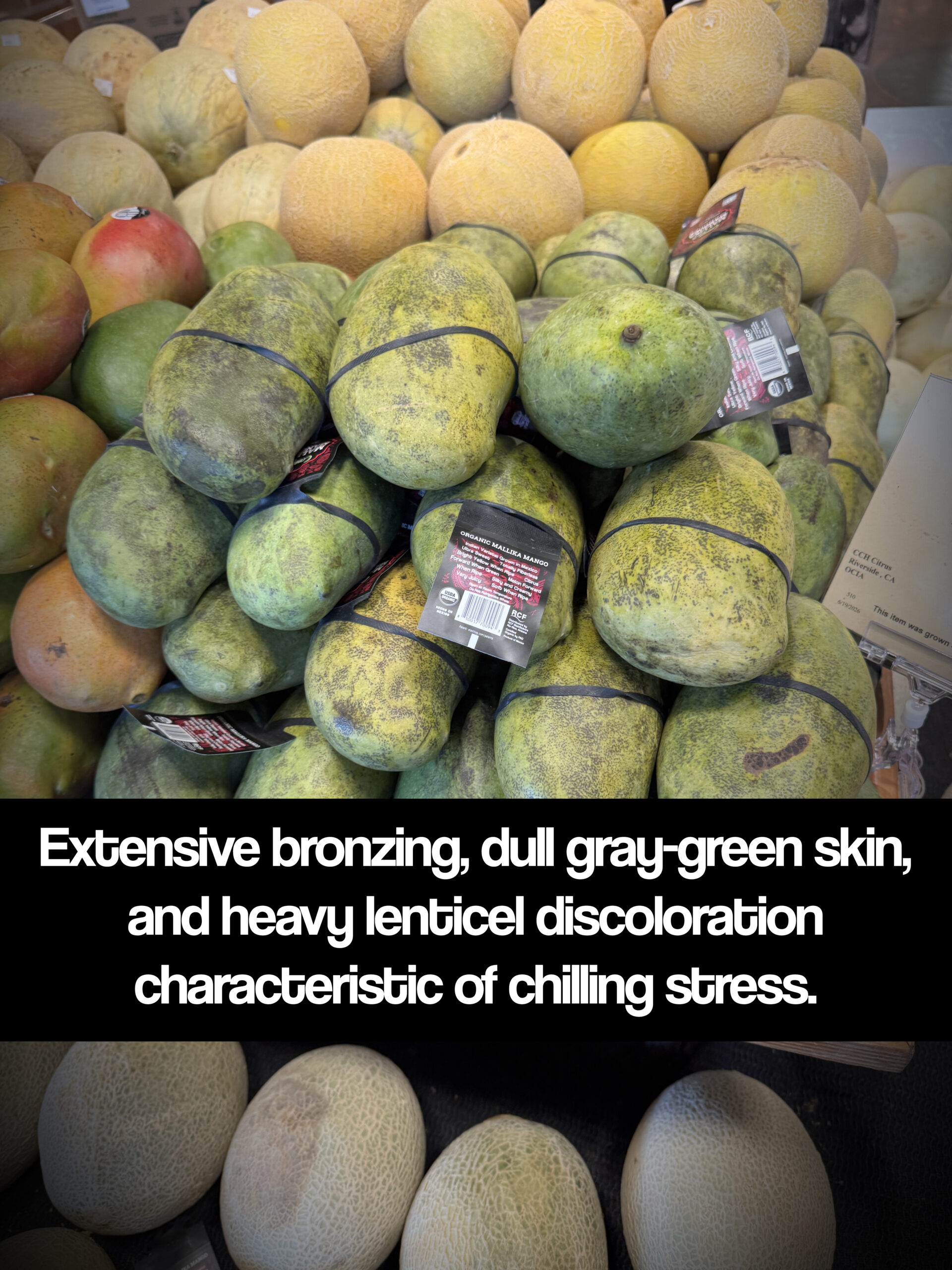
Chilling Injury is Cumulative
The effects of cold exposure build over time, with every hour below the recommended 50–55°F range adding physiological stress. Because mangoes are climacteric fruit, ripening is an active biological process that continues throughout the postharvest chain. The goal of the cold chain is not simply to slow that process, but to support it by maintaining the fruit within its safe physiological range.
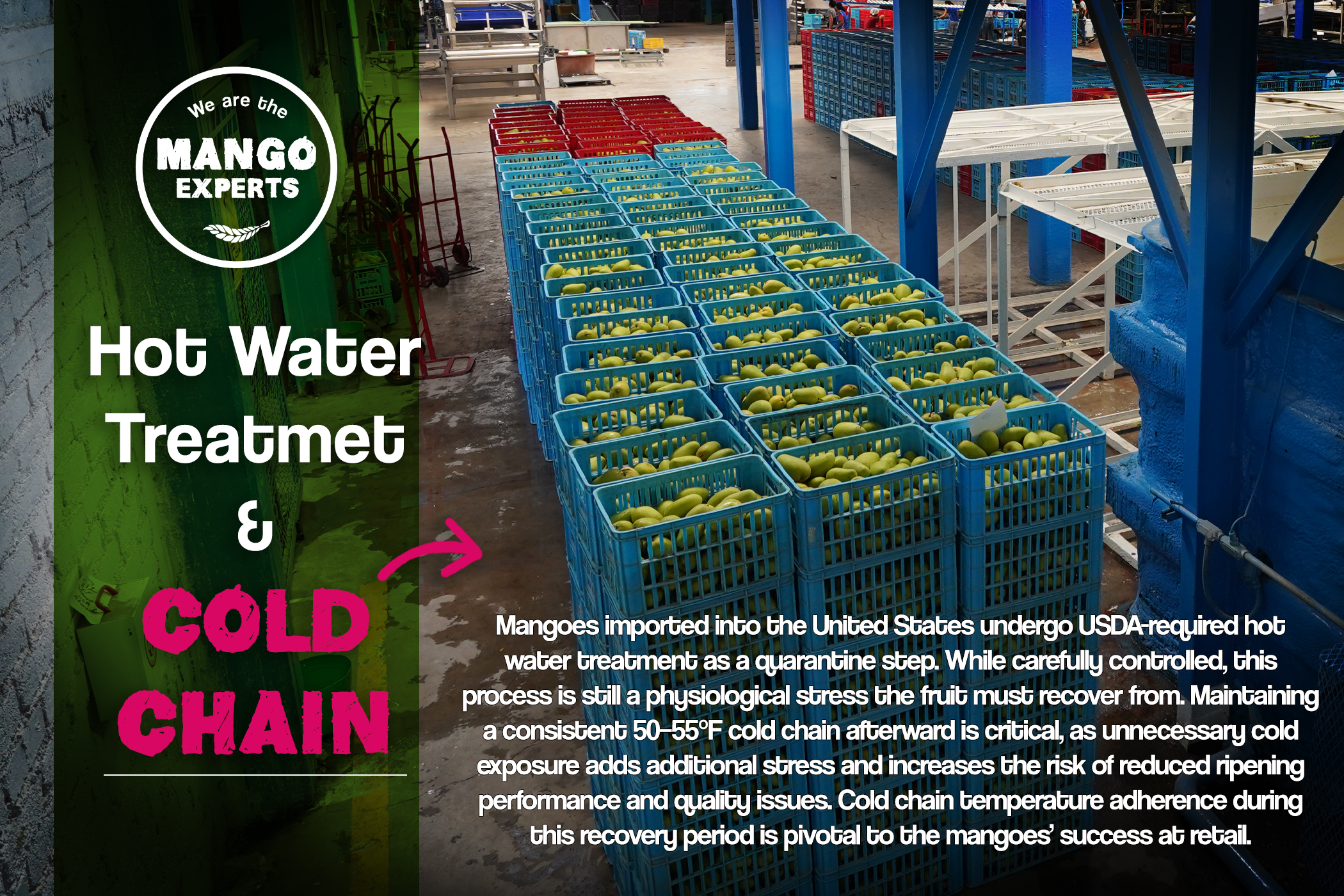
Mangoes imported into the United States undergo USDA-required hot water treatment as a quarantine step. While carefully controlled, this process is still a physiological stress the fruit must recover from. Maintaining a consistent 50–55°F cold chain afterward is critical, as unnecessary cold exposure adds additional stress and increases the risk of reduced ripening performance and quality issues. Cold chain temperature adherence during this recovery period is pivotal to the mangoes’ success at retail.
By providing a consistent 50–55°F environment from packing through distribution, the fruit can progress through ripening at a pace that matches the length of the supply chain, maximizing flavor, texture, aroma, appearance, and overall eating quality. Every additional stress after that, particularly unnecessary cold exposure, compounds previous stress and further compromises the fruit’s ability to develop into the exceptional eating experience it could become.
Because internal chilling injury often remains invisible for days, the original cold exposure is rarely recognized and is often blamed on the varietal, the grower, or the season rather than the cold chain itself.
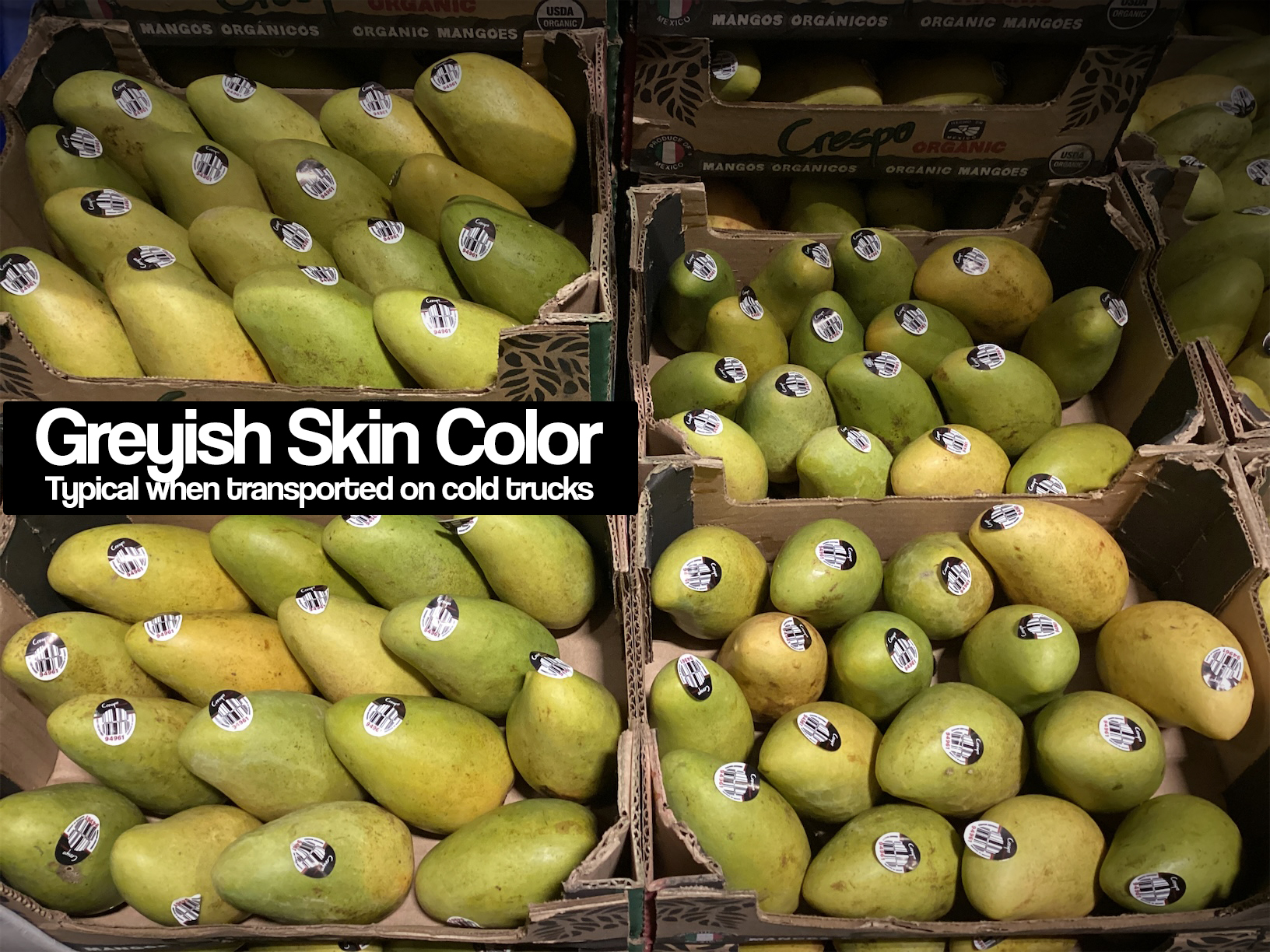
Ataulfo Cold Science
Ataulfo is one of the most cold-sensitive commercial mango varieties imported into the United States. Compared to Tommy Atkins, Kent, Keitt, and other round varieties, it has thinner skin, a higher concentration of surface lenticels, exceptionally high sugar levels, fiberless flesh, and a delicate natural cuticle.
These are the same characteristics that make Ataulfo one of the world’s most sought-after mangoes. They create its signature buttery texture, sweetness, and eating experience—but they also leave the fruit with far less tolerance for cold stress.
This is where the industry needs to shift its thinking. We already understand this approach with other highly sensitive commodities. Berry programs have built their success around strict temperature management because the supply chain recognizes that the fruit cannot be expected to tolerate conditions outside of its physiological needs.
Ataulfo deserves that same level of attention. While a mango may not have the same per-unit value as a berry package, every box represents the work of growers, packers, importers, and retailers. Every mango is an experience in the hands of a consumer. It’s a memory linking to the hope of the next experience. Every box matters. Especially in a challenging season, we cannot continue to build a premium category while accepting preventable losses caused by transportation practices that do not match the needs of the fruit.
This is not a fruit that can adapt to a colder system.
Thin Skin: Ataulfo has a thinner epidermis than many commercial mango varieties, providing less protection from cold exposure. Because its lenticels sit close to the surface, chilling injury becomes visible sooner and more dramatically.
Dense Lenticels: Ataulfo has an unusually high concentration of prominent lenticels. These natural pores support gas exchange and faster ripening but also become vulnerable points under stress. Cold exposure can trigger oxidation around these areas, creating the dark spotting and skin breakdown commonly associated with chilling injury.
Fiberless Flesh: The smooth, buttery texture consumers love comes from a delicate cellular structure with little internal reinforcement. This makes the flesh more susceptible to cellular damage when exposed to cold stress.
High Sugar Content: Ataulfo’s naturally high soluble solids contribute to its exceptional flavor, but they also reflect a highly active fruit metabolism. Under stress, the biochemical pathways associated with browning and tissue breakdown can accelerate.
Thin Natural Cuticle: Ataulfo’s protective wax layer is thinner than many commercial mangoes, reducing protection against moisture loss, condensation, and surface damage during cold, humid transport conditions.
A Narrow Ripening Window: Ataulfo moves through ripening quickly and has less tolerance for disruption. Cold stress can interfere with the fruit’s normal ethylene-driven ripening process, leading to delayed, erratic and uneven ripening as well as uneven color development, skin breakdown, lower brix, increased acid and general reduced shelf life, and loss of texture.
The same traits that make Ataulfo exceptional are the reasons it requires a more intentional cold chain.