Doors Closing & Opening

We’re nearing the point where all good things eventually come to an end, so let’s get right to it. As the Mexican mango season prepares to close its doors, one last opportunity is opening. At a time when food costs continue to climb and value is becoming harder to find, the Mexican mango program is delivering one final gift: BIG, beautiful Keitt mangoes.
These impressive fruits give retailers the chance to build bold, eye-catching displays while still offering shoppers exceptional value. It’s an opportunity to finish the season strong with premium-sized mangoes that make an impact without putting additional pressure on consumers’ budgets. Right now, that’s an opportunity worth taking.
Our southern Sinaloa orchards are quickly winding down. Both Kents and Keitts are still trickling in from the region, and thanks to the dual-zone production we’re known for, our small-fruit programs (8s, 9s, and 10s) continue from Rosario, while the fruit coming from Los Mochis naturally sizes up. By this point in the season, most customers have already moved into larger counts and embraced the flexibility that always comes with the final weeks as we work to extend the Mexican season. This year, however, that season is ending more than a month earlier than normal, creating an especially difficult gap looming for the organic market.
Currently, the majority of our volume is Keitt, coming from the non-hot-water-treated Los Mochis region. Large fruit is typical for both the region and the variety.
As we near the close of the Mexican mango season—currently expected to wrap up around August 20, or possibly sooner—we have a tremendous opportunity with BIG fruit. Retailers looking for an economical, high-impact item for value-conscious shoppers should be paying close attention. Large 4-, 5-, 6-, and 7-count Keitts offer outstanding merchandising potential, creating bold displays while delivering exceptional value at a time when consumers are watching every dollar they spend.
Quality is outstanding thanks to dry weather and an excellent finish to the season. While the fruit is maturing quickly all season all varietals, that’s no concern for Keitts. Big, durable, and naturally built for the long haul, Keitt mangoes are firmer, slower-ripening fruit with exceptional shelf life, excellent flesh recovery, and outstanding shipping and merchandising performance—giving retailers the flexibility to confidently carry the Mexican mango season through its final weeks without sacrificing eating quality.
The Keitt mango is always the final chapter of the Mexican mango season, and there’s a good reason it finishes last. Of all the major commercial varieties, it’s the slowest—and often the least predictable—to ripen. That’s not a flaw; it’s one of its greatest strengths for elongating the season.
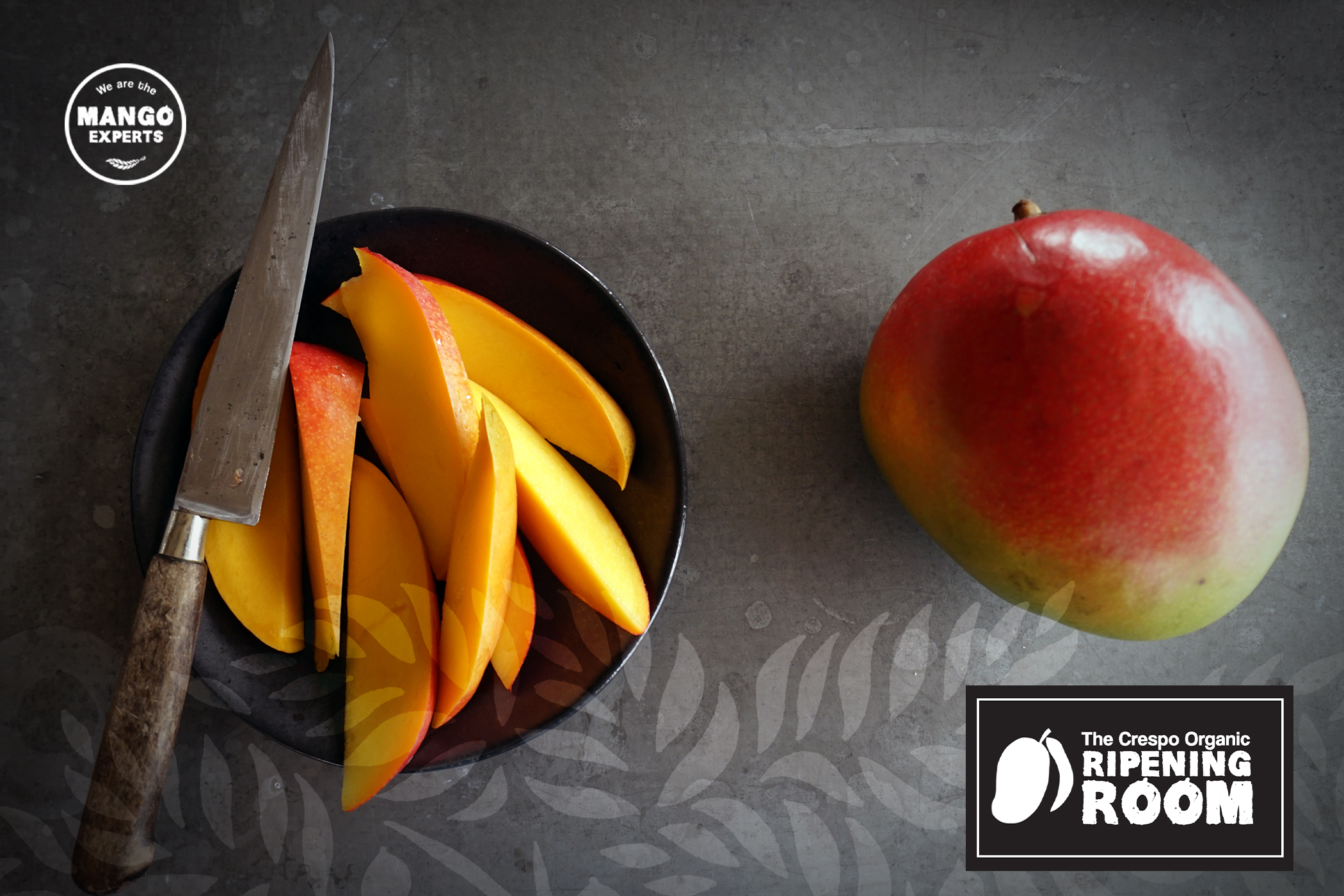
As we’ve discussed before in the Science of Mango Ripening and the Crespo Organic Ripening Room, Keitts have a naturally lower respiration rate and a slower response to ethylene than earlier varieties. Their climacteric ripening process—from starch conversion to sugar development and softening—takes longer, creating exceptional shelf life and a much wider merchandising window.
Keitts have dense, firm flesh, a thick protective skin, excellent flesh recovery, and naturally low fiber. They often resist bruising, ship exceptionally well, and hold their texture longer than most varieties, making them ideal for retailers.
Add in their naturally large size, ability to remain on the tree later into the season, outstanding postharvest performance, and rich tropical, silky flavor, and it’s easy to see why Keitts define the final weeks of the Mexican mango season.
During these final weeks, Crespo Organic Keitt mangoes present retailers with a rare merchandising opportunity: a premium, BIG, BOLD, BEAUTIFUL, piece of fruit that still delivers exceptional value. In a time of global economic uncertainty and rising food costs, that’s a win for retailers, a win for consumers, and exactly the kind of #MangoJoy the Crespo program is known for.
A note about Peru: Everyone is currently reporting similar observations. More time is needed before the full picture emerges, and I’m continuing to monitor and discuss. For now, this appears consistent with what we previously reported — high heat is impacting flower development, much like the conditions we recently experienced in Mexico.
