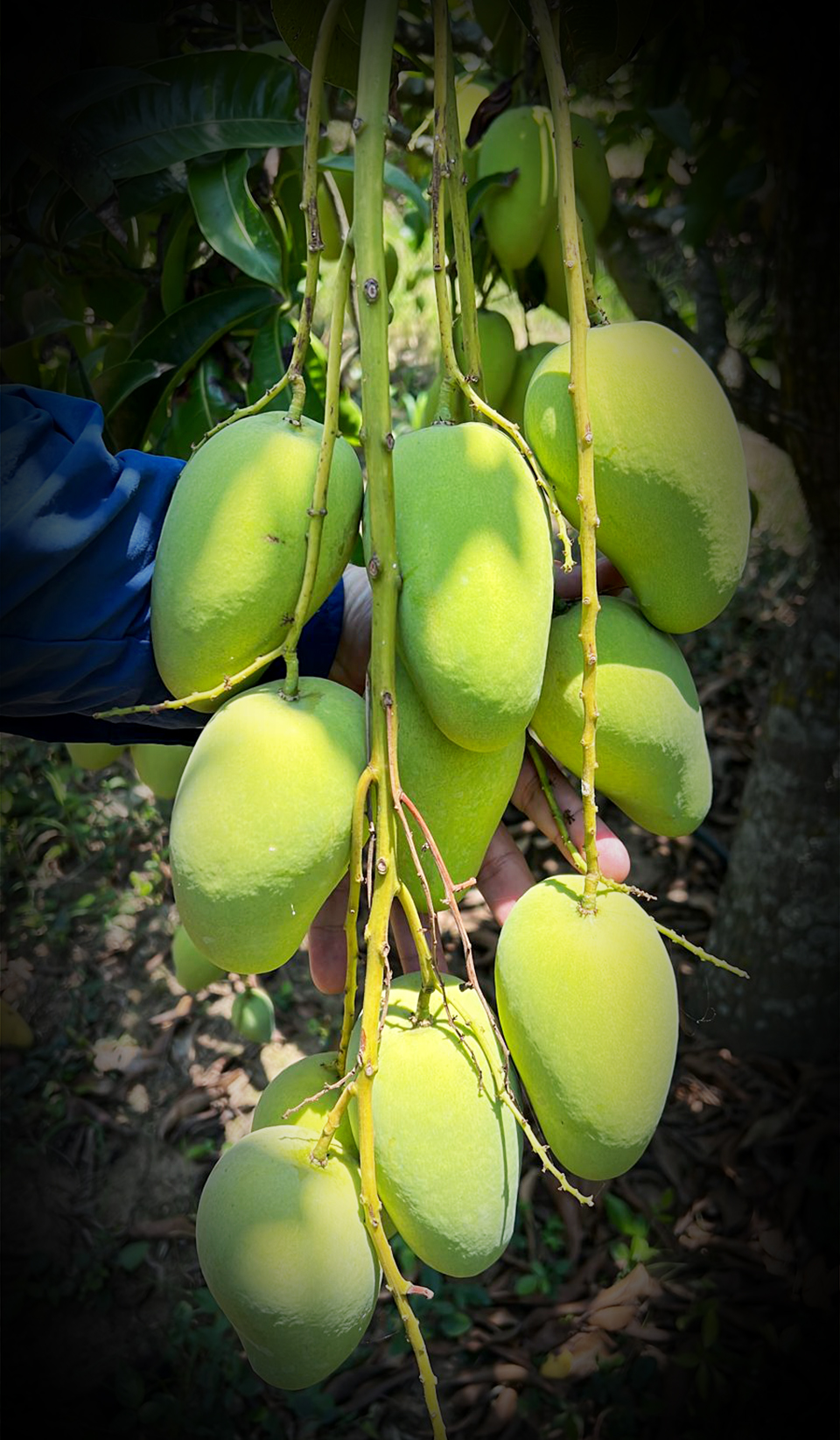
Ataulfo Gap Week

Disclaimer: The mango market moves fast. By the time you read this, availability may already be shifting and trucks may already be rolling. This report is not a signal to stop volume or pull back on orders — it is information, context, and transparency about what we are seeing in real time. Use it to understand the supply chain more fully, not to pause it.
Ataulfos are having an unexpected gap week and I’m taking seriously the idea of gap weeks allowing for reflection, deep thinking and future goal planning.
Back in December, in my Thrippy Crespo Report, I flagged that gaps were likely coming — but that they might not hit the industry uniformly. We’ve been watching carefully ever since, but maybe we weren’t watching closely enough, because Oaxaca and Chiapas are currently experiencing a real gap in Ataulfo availability as fruit readiness is failing to align with market demand.
Gaps in fruit production for crops with multiple bloom stages — apples, pears, stone fruits, mangoes — typically stem from failures to synchronize pollination across overlapping bloom cycles, compounded by environmental stress like heat, pest pressure, and uneven nutrient management. We understood early in the season that this dynamic was at play in Oaxaca and Chiapas, where thrips moved aggressively before and into bloom stage, disrupting pollination and driving flower drop and poor fruit set across orchards already managing difficult conditions.
What we failed to do — what the industry as a whole failed to do — was call out this specific end-of-March gap window with enough clarity to allow buyers and distributors to bridge it. The diagnosis was there. The translation into actionable supply planning wasn’t.The reality of gap talk in the mango industry is complicated. José Angel Crespo — Crespo Organic’s jefe and current president of EMEX, the Association of Mango Exporters of Mexico — reminds me that there is often talk of gaps, but that they don’t always materialize as actual market gaps. More often, gaps are micro regional and offset each other in terms of total volume. That has largely been the story of this season, product coming in waves of size, but in plenty — until now.
This season layered on an additional level of complexity that, in retrospect, functioned almost like camouflage. We weren’t simply watching a quiet market waiting for fruit to show up or not — we were managing super high demand within a constantly daily shifting size picture, long on some sizes, short on others, with size availability changing week to week in ways that demanded constant attention and recalibration — all of this compounded by climate shifts driving warmer temperatures and faster maturation.
That noise — the daily operational noise of managing a complex supply — drew focus away from the larger structural gap building underneath it. Serious eyes got pulled into the immediate and lost sight of the cumulative. I include myself in that. There is real guilt in looking back and seeing the signal that this was coming — the thrips pressure on bloom in Oaxaca and Chiapas, the pollination disruptions, the flower drop and compromised fruit set we documented in December and even into January — and knowing I didn’t ask the right questions or push hard enough.
I didn’t expect to have to hit the brakes suddenly, and I know the market didn’t, and I think the growers didn’t either. The gap wasn’t invisible but it was obscured by everything else we were managing, and we are all to blame.

The Current Result of the Misdiagnosis
This week, the shortfall landed hard. Trucks that were supposed to be filled and gone by Thursday, Friday, and Saturday are still mostly waiting for fruit to come into the packhouses to be packed. Fruit is trickling in on the harvest side. Even in Tapachula — the cradle of the Ataulfo mango, where the variety was born and where it is known to always flourish — there is still a significant amount of fruit not yet ready to harvest. The struggles are real.
According to Raúl Arcos, Founder and Director of Palenque Foods International, a significant number of blooms that should be yielding harvestable fruit right now simply didn’t succeed — and everyone across the supply chain is now struggling to fulfill programs.
Both Raúl and José Angel concur that next week’s harvest should bring improvement — something is better than nothing, as the saying goes — with further recovery the week after, and a return to normal volume expected as we move into April.
The Lesson- Eyes Peeled
This gap is a lesson I have learned and one I think the entire industry needs to take seriously. We need to be watching more closely, day to day, asking harder questions earlier — not waiting for the shortfall to make itself visible in empty trucks. Because what is ahead will demand even more vigilance from all of us.
As I reported in last weeks Crop Report Are the Flowering Rumors True?, the volume challenges coming out of Sinaloa and Nayarit this season will be significant — flowering and fruit set is running well below normal, cold windows that never delivered what the trees needed will result in a Mexican peak season that will be compressed, erratic, and unforgiving for buyers and sellers that are not on high alert.
Booming issues will create inevitable gaps. They may not all feel as stark as this empty Ataulfo week, but in a season already running on increased demand, reduced supply and elevated pressure, anything short feels hard.