Are the Flowering Rumors True?

Crespo Organic Mangoes: Rosario, Sinaloa, Mexico
Lee este artículo en español.
Since the opening of the Mexican season, I have been paying attention to other commodities in other regions of Mexico talking about the relentless and uncommon heat blanketing the country, causing countless and ongoing issues with insects, quality, and yields. There have been tremendous problems reported in everything from tomatoes to limes to berries to citrus, and even though cartels, tariffs, and wars have a significant effect on things lately, the weather is the most predominant issue most farmers are facing in almost all commodities across Mexico. Mangoes seem to be telling the same story.
In last week’s Crop Report I shared that in the south, Chiapas and Oaxaca saw a jump in temps and more importantly the diurnal temperature ranges, creating better flavor but also much faster ripening. This week, as mango growers in Nayarit and Sinaloa start to take stock of the season and we prepare expectations for the peak Mexican months of May, June, July, and August, there are two predominant things everyone is paying attention to — flowering is running very late, and flower counts are well below normal. The next ten to fourteen days will be determinative. If flowering does not significantly improve, total production could come in as low as 30% of normal.
Growing Leaves Instead of Flowers
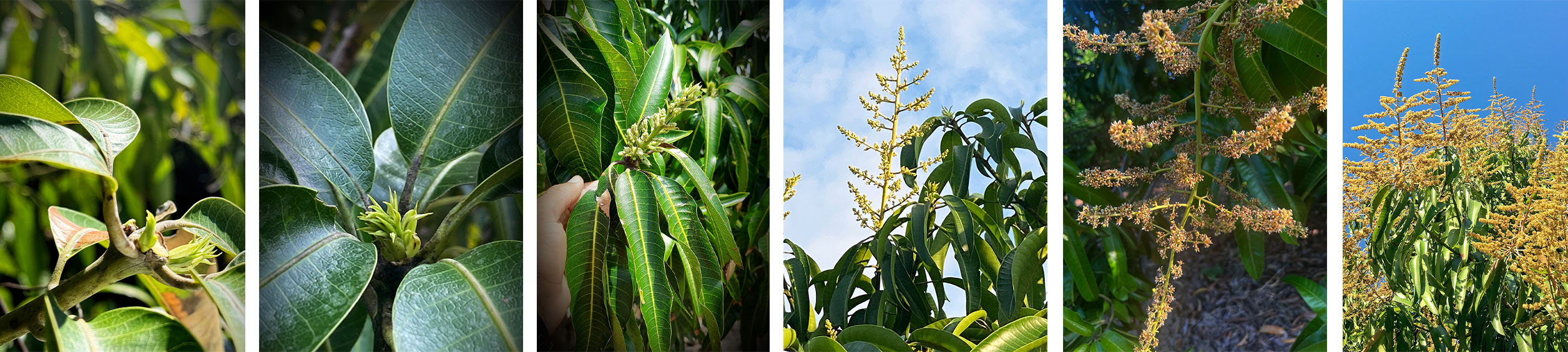
Mango trees are triggered into flowering by cold — specifically sustained cool nights below 60°F and for Nayarit and Sinaloa, that means across the December through February window. This is not just about one cold snap. It is about accumulation. The tree needs weeks of consistently cool nights to shift its biology from vegetative growth into reproductive mode. Without that sustained cold, the tree keeps pushing leaves and the flowering window quietly closes.
In Sinaloa, the 2024–2025 season delivered exactly that. January and February 2025 saw nights regularly dropping into the low-to-mid 40s°F — well below the threshold, sustained across both months. Trees read the signal, initiated panicles, and the season flowered and set fruit on a normal timeline.
This season ran a different pattern entirely. December 2025 looked relatively normal, but January and February 2026 — the two most critical months for panicle induction and pollination (watch Mango Blooms Wow! for the science) — stayed warm at night. Nights were holding in the mid-to-upper 60s°F, running 15–20°F warmer than the same period last year. The threshold was never consistently reached. Growers in Sinaloa confirmed what the temperature data shows: by late February, flowering across orchards was reported at only 30% of where it should be, with varieties that are normally in full bloom showing very little activity. At that point, most growers were still holding onto the hope that the season was simply running late — not that it had fundamentally failed to trigger.
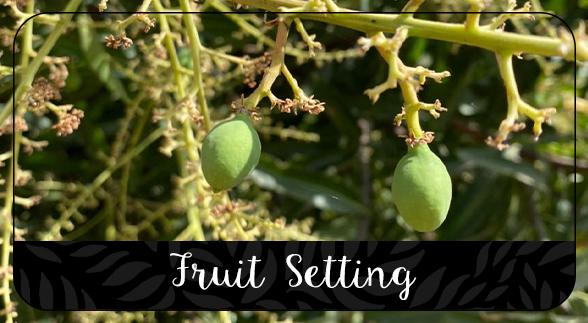
Cold Window Essentially Closed
The cold window has now essentially closed. Temperatures in Sinaloa are running cooler in March than they did in January and February — but that cooling is likely to be too little, too late. The tree’s flowering cycle runs on cumulative cold exposure, not a single cool stretch, and the weeks that mattered most already passed without delivering what the trees needed. Growers are giving it another ten to fourteen days to see if anything additional comes, but the biology is not on their side. Fruit set at this point is minimal, and expectations for the northern Nayarit and more importantly Sinaloa season are being recalibrated accordingly.
February is particularly important because it is not just when flower buds begin forming inside the tree — it is when those buds break open, panicles emerge, and pollination actually happens. A warm February does not just slow that process down. It interrupts it entirely. Fewer panicles mean fewer flowers, fewer flowers mean reduced fruit set, and reduced fruit set in Sinaloa — the highest-volume region of the entire Mexican season — means a compressed, lower-yield peak at exactly the point the market is counting on volume.
Dr. Noris Ledesma, Emeritus Curator of Tropical Fruit at Fairchild Tropical Botanic Garden and one of the world’s foremost mango horticulturists, puts the biology plainly: mangoes typically flower when temperatures are between 68°F and 86°F. Once temperatures climb above 95°F, flower drop accelerates and fruit set declines. Push beyond 100°F and the damage becomes structural — pollen viability drops, stigma receptivity is compromised, and the flowers that do open can’t do their job. High heat also shortens the flowering period itself, compressing the already narrow window for pollination.
But the more insidious problem this season was not the daytime highs. It was the nights that never cooled down enough to send the signal in the first place. As of March 12, that irony is complete — the first major heat wave of 2026 is now arriving across Sinaloa and Nayarit, with daytime highs running 91–100°F (33–38°C), directly in the range where pollen viability fails and fruit set declines. There is one small piece of good news: nights are finally dropping into the low-to-mid 50s°F (10–13°C), below the 60°F (15°C) threshold the trees needed all winter. Too late to drive flowering, but for any trees still carrying active panicles, those cooler nights may help stabilize what little fruit set remains. Growers will take whatever the weather gives them at this point.
Flowers by Variety
Not all mango varieties respond to heat stress the same way, and this season is making those differences visible in real time. It’s worth a listen to the conversation I had with Dr. Ledesma on my podcast 3 Minute Mango Expertise, a few years back on climate change and specialty varieties. As she noted, mango flowers are fascinating and diverse depending on genetics and management — and while high temperatures can significantly impact flowering and fruit set, we have learned that some varieties are far more resilient than others.
Ataulfo is faring the best of the commercial varieties this season, showing approximately 70% of normal production. This tracks with what we know about the variety. Unlike Tommy, Kent, and Keitt — which have been selectively bred over generations for commercial traits like size, color, and shelf life — Ataulfo reproduces true to its mother tree. Every seed is essentially a clone, passing the same genetics and the same stress tolerance forward. It has never been bred far from its origins, and it shows. Ataulfo is genetically closer to the mango in its natural state, with deep roots in the stress-adapted soils of southern Mexico, and that proximity to its wild roots is a significant part of why it handles a difficult season better than its more commercially refined counterparts. When conditions shift, Ataulfo adjusts. It does not require perfection to perform.
Tommy Atkins is showing significant decline. Despite being widely considered one of the more climatically tolerant varieties in terms of cold hardiness, Tommy Atkins is highly dependent on favorable growing conditions to flower and set fruit consistently. When the weather goes sideways, Tommy tends to show it first and hardest.
Kent is faring the worst of the three major commercial round varieties this season. Research supports what growers are seeing — Kent has the narrowest tolerance window of the commercial lineup, demanding more precise conditions to flower and set fruit than either Tommy or Keitt. It is a high-performance variety in the truest sense: when soil, temperature, and moisture all align, it delivers exceptional volume and quality. When any one of those variables falls out of range, Kent does not adapt — it simply underperforms. This season handed it every variable at once, and the flowering numbers reflect it.
Keitt is performing better than Kent this season, which aligns with what research shows about the variety — Keitt requires fewer sustained cold days to trigger flowering than other commercial varieties, making it less dependent on the cold window that failed this season. It is also a late-season variety by nature, with a biology already calibrated for warmer conditions and a longer timeline. Heat does not rattle Keitt the way it does Kent. That tolerance is working in its favor relative to the other round varieties — but make no mistake, Keitt is still well under normal flowering production this season. Better than Kent is a low bar this year.
The Mango Queen specialty varieties — Mallika, Nam Doc Mai, and Kiew Savoy — are telling a different story. Mallika is running late but flowering relatively normally. Nam Doc Mai and Kiew Savoy appear to be doing well. These varieties are generally adapted to warmer, more tropical conditions and tend to be less dependent on the same cold accumulation threshold that the Florida-origin commercial varieties require. They are built for heat. The northern regions and this particular season suits them, in regard to flowering anyhow — processing them through the hot water treatment may be a different story.
The broader pattern here is worth noting. The commercial round varieties — Tommy, Kent, Keitt — all trace their origins to subtropical Florida, where they were selected for specific growing conditions that do not always mirror what Sinaloa throws at them in an anomalous year. But as climate change continues to compress and distort the cold windows that Mexican mango growing regions have historically relied on, anomalous years are becoming less anomalous. The specialty varieties, many of which originate in South and Southeast Asia, evolved under persistent heat and variable conditions. They were built for exactly the kind of pressure that climate change is now applying — something Dr. Ledesma has spoken to directly, naming Angie, Rosigold, Cherry, Mallika, Nilgoa, and Pickering among the varieties showing the greatest heat resilience as growing conditions shift.
The Spoiled Flatlands
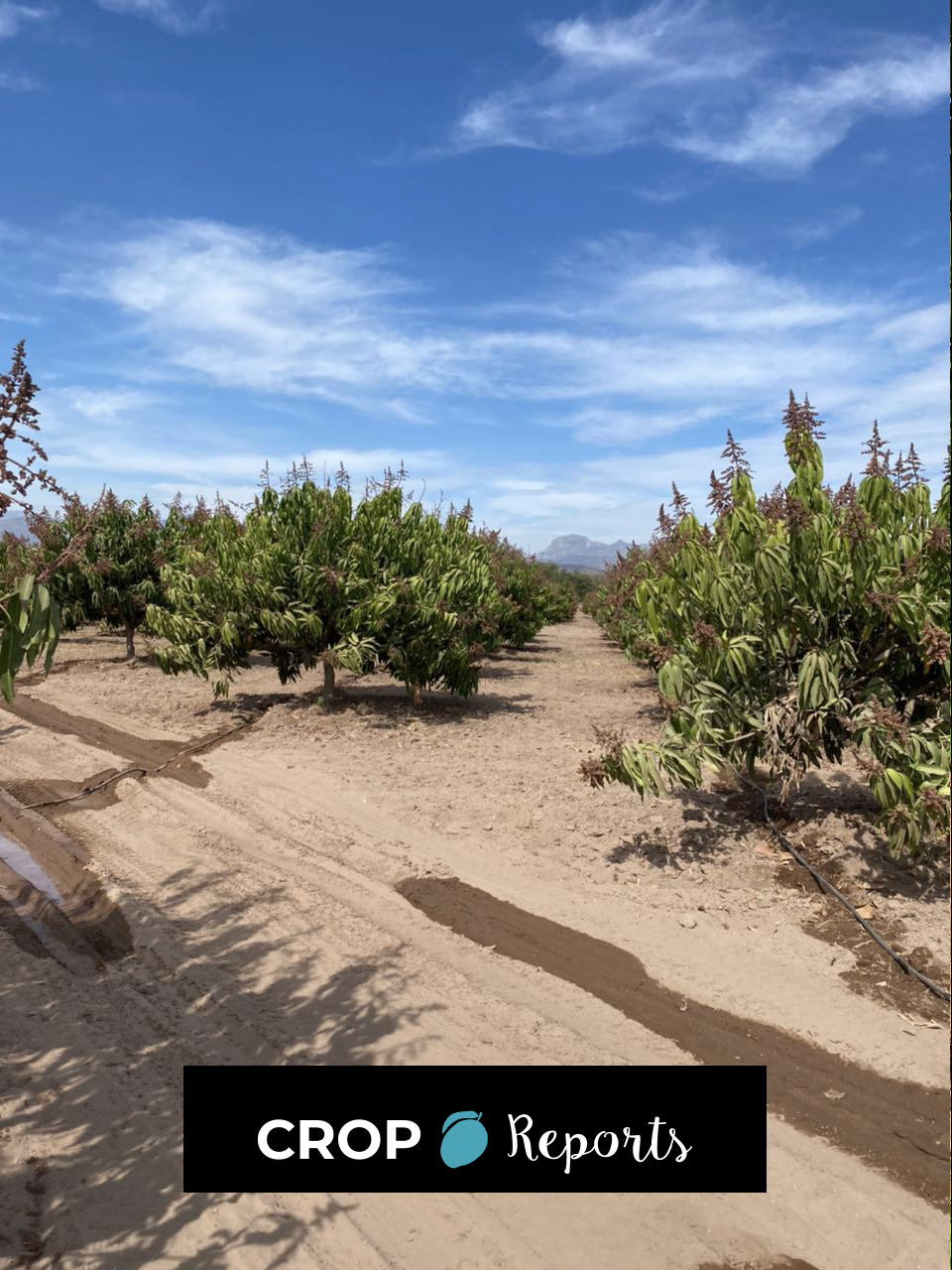
One additional factor shaping this season’s picture is terrain. Not all of Sinaloa’s mango orchards sit on the same ground. The large valley floor orchards — flatlands with consistent conditions, reliable irrigation access, and relatively stable temperatures (the spoiled farms as Jorge the Crespo Mango Man calls them) — are built for normal years. They produce well when everything cooperates. But this season, the critical variable wasn’t soil fertility or water availability. It was nighttime temperature. And that’s where terrain matters.
The valley floor orchards sit on dense, dark clay soils that are among the most heat-retentive soils in agriculture. Clay has a higher heat capacity than sand or loam, meaning it absorbs more heat during the day and holds onto it longer into the night. In a season where nighttime temperatures were already running 15–20°F above where they needed to be, flatland clay orchards were running even warmer at the root zone — the soil itself amplifying the problem the atmosphere was already creating.
Foothill and sierra-edge orchards sit on lighter, better-drained soils at elevation. They lose heat faster at night, run cooler through the root zone, and in a warm winter like this one, were more likely to accumulate the cold hours the valley floor never delivered. Research confirms what growers know: it is not elevation alone that drives mango performance, but the range of temperatures available. Terrain and soil type both shape that range. This season, the flatland clay orchards — built for consistency, optimized for ideal years — had neither the elevation nor the soil profile working in their favor. The trees that have always had everything handed to them are showing it most.
The Organic Advantage in a Stress Year
One more variable worth naming: organic orchards are showing greater resilience this season, and the soil science explains why. Organic management — compost, cover crops, reduced chemical inputs — builds microbial diversity and soil organic matter over time. That biological activity improves water retention, reduces compaction, and supports deeper, more extensive root systems. In a season defined by heat stress and disrupted temperature patterns, trees rooted in biologically active soil have more to draw on. Research supports what growers are seeing on the ground: organic soil management promotes a more resilient crop system precisely when conditions stop cooperating. Conventional orchards, dependent on synthetic inputs that feed the plant without building the soil, don’t have that reserve. Organic soil isn’t just a farming philosophy — it’s a climate hedge, and this season is proving it.
Hot Flash Season?
The season will likely run longer than normal as a result of the staggered and reduced flowering — trees that didn’t bloom together won’t ripen together, and that spread will stretch the harvest window in ways the market isn’t always prepared for. But there’s a countervailing force: heat. High temperatures arriving earlier and harder than historical norms will accelerate ripening once fruit does set, pushing mangoes through their development faster than the calendar would suggest. The result is a season that is both longer and more compressed at the same time — stretched at the front end by late, uneven flowering, and squeezed at the back end by heat that doesn’t wait. For buyers, that means a more erratic supply curve than a normal season delivers. Volume won’t build the way it typically does, peaks will be harder to predict, and the window for promotional planning will be narrower and less forgiving. Plan for uncertainty. The season isn’t going to behave. But I imagine the state of the entire world reflects this sentiment in general.
Higher Price Points & Continued Chaos
The one thing everyone agrees on right now is that pricing will continue to run higher than normal this season. Beyond that, the picture is still forming. There are plenty of voices saying the season will correct itself, that the flowering will come, that the numbers will be fine — but the larger portion I trust are far more cautious about that kind of optimism.
Mangoes don’t exist in isolation. Oil prices, the ongoing war, tariff threats — every one of those variables is already pushing input costs and logistics pricing higher across the board. The chaos that has defined the broader market for the last several years isn’t retreating. This is the new norm. A season on edge will continue to be our existence — but that doesn’t mean we can’t create the same #MangoJoy we always do. It means we need to be more committed to each other. Committed direct trade partnerships will fare the best in the mango landscape ahead.
As for Crespo Organic, our production in the northern states is plentiful and we have big plans as usual for Summer Mango Mania. We have the fully integrated systems to deliver the best orchard to table experience, and we plan to — regardless of what comes.
Two more weeks will tell most of the story on flowering, fruit set, and volume. Until then, all any of us can do is work with what is true today, not what we hope will be true in June.
A note on dried mango: this season will affect dried mangoes as much as fresh. Supply constraints and pricing pressure will move through both categories. I will report on this as well in two weeks.
[…] artículo fue traducido de la versión original en inglés por Claude […]