
Mango Ripening Science
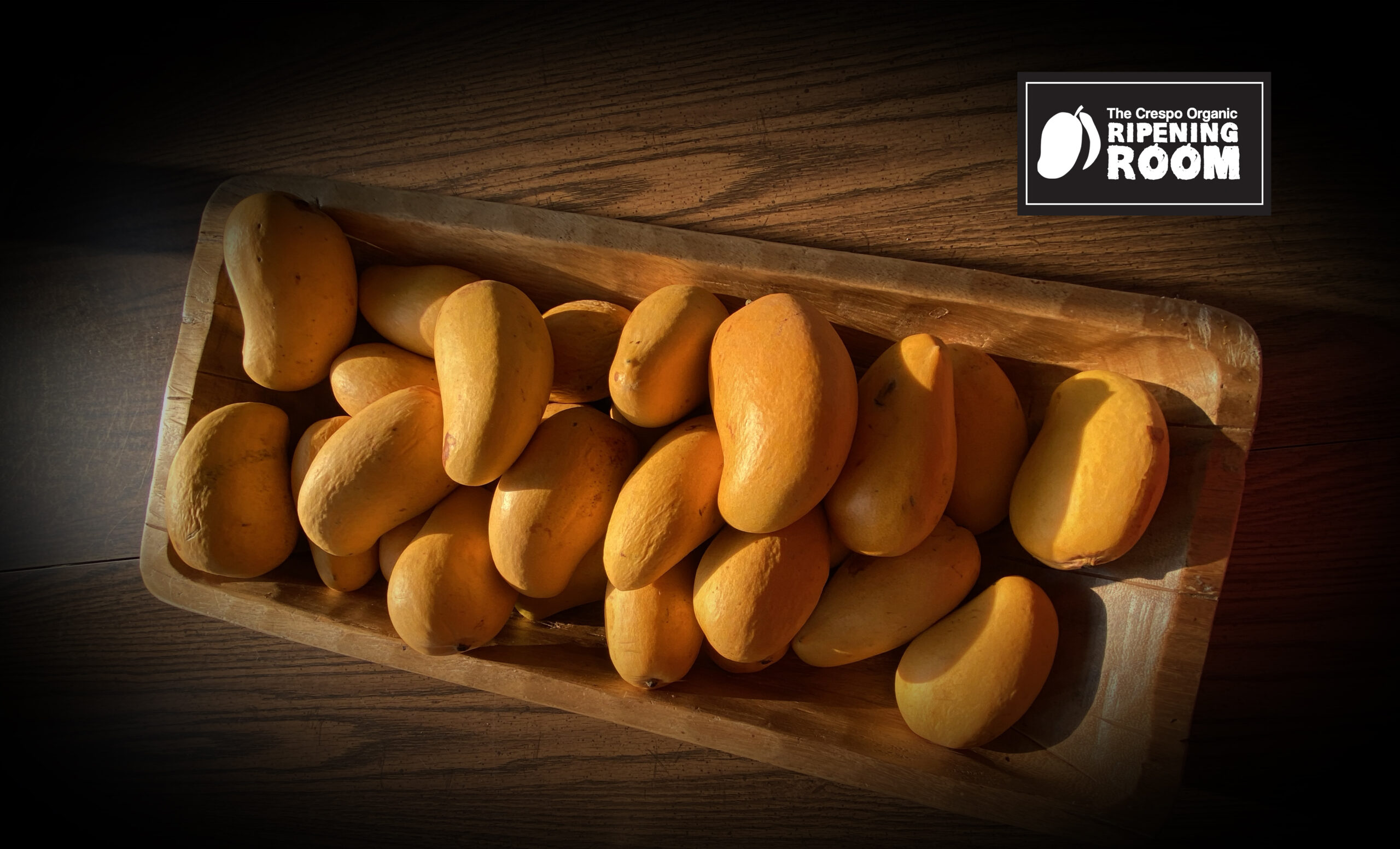
Mangoes are climacteric fruit — meaning they are genetically programmed to continue ripening after they leave the tree. Once separated from the tree, they trigger their own internal ripening process driven by ethylene production. The tree essentially hands off the ripening job to the fruit itself.
Here’s how it works from that early harvest point:
Brix measures the sugar content in fruit — in mangoes, mature Brix typically falls between 9–14° at harvest depending on variety, indicating the fruit has developed enough sugar to ripen properly off the tree, while a fully ripened mango reaches 16–20° Brix or higher. A 12° Brix reading indicates a good, healthy, ripe fruit, while values above 18° are considered very sweet and 20°+ is exceptional — often found only in tree-ripened or carefully handled fruit. Kent, Nam Doc Mai, Mallika, and Ataulfo can all reach 18°+ when moved correctly through the supply chain, delivering the sweet, complex flavor the fruit is known for.
Maturity means the seed is fully developed and the fruit has enough starch reserves stored to complete the ripening process on its own. That’s the critical distinction — the tree has done its job even if the sugar hasn’t fully converted yet.
Growers assess maturity in the field through several markers beyond Brix. Dry matter content — the proportion of the fruit’s weight that isn’t water — is one of the most reliable indicators, as it correlates directly with starch reserves and post-harvest ripening potential. Flesh-to-seed ratio and specific gravity are also used — a denser fruit with a fully developed seed and adequate flesh development signals physiological maturity even when sugar conversion hasn’t yet begun. These field assessments are what determine whether a mango is ready to harvest and capable of ripening correctly once it leaves the tree.
Once harvested, the mango begins producing ethylene internally. Ethylene is the hormone that triggers the cascade of changes we associate with ripening — starch converts to sugar (brix climbs), chlorophyll breaks down (color shifts), cell walls soften (texture changes), volatile aromatic compounds develop (flavor and fragrance emerge). All of that happens in sequence, driven by the fruit’s own chemistry.
The hot water bath required by USDA for pest treatment is applied rapidly post harvest — it has to happen before full ripening or it damages the fruit. It does introduce some stress to the fruit’s skin and can affect the outer cell structure, which is part of why handling and ripening environment post-bath matter so much.
After the bath and packing process, the mango arrives in market still relatively firm and lower-brix. From that point, everything the distributor or retailer does — or doesn’t do — either supports or disrupts that natural ethylene-driven process. Mango quality is most often determined by distribution and retail handling.
This is exactly why ripening education matters and why we are rolling out The Ripening Room for Crespo Organic. You can read more about The Ripening Room here.
For now let’s geek out on the mango science!

Ethylene
Ethylene (C₂H₄) is a gaseous plant hormone — the primary driver of climacteric ripening. When a mango reaches physiological maturity, it begins producing ethylene endogenously. Ethylene binds to receptors in the fruit’s cells and triggers a gene expression cascade that initiates and coordinates all downstream ripening changes. The more ethylene present around the fruit, the faster and more uniformly it ripens — which is the entire science behind every ripening method (trapping) method that will be unveiled soon in The Mango Ripening Room
Starch to Sugar Conversion
At harvest, the mango’s flesh is high in starch. As ripening progresses, amylase enzymes break those starches down into simple sugars — sucrose, glucose, and fructose. This is what drives Brix up from 9–14° at harvest to 18–20°+ at peak ripeness, and varietal differences matter significantly here. Kent and Ataulfo tend toward rich sucrose-dominant sweetness with notable depth, while Tommy Atkins converts more modestly, typically peaking in the 14–16° range with a milder, less complex sugar profile. Nam DocMai and Mallika, when handled well, develop high fructose-forward sweetness with floral top notes that set them apart from the heavier, rounder sweetness of larger varieties. This starch-to-sugar conversion is also what produces the characteristic sweetness and that slight caramelized depth in a fully ripe mango — the difference between a mango that tastes like candy and one that merely tastes like sweet fruit.
Cell Wall Breakdown
Enzymes — primarily polygalacturonase and pectinase — break down pectin in the cell walls. This is what causes the flesh to go from firm and starchy to soft, creamy, and juicy. The rate of this breakdown is directly tied to temperature and ethylene concentration. Too fast and you get mushy overripe fruit. Too slow and you get uneven ripening — firm on the outside, still starchy inside.
Chlorophyll Degradation
Chlorophyll breaks down as ethylene concentration rises, which is what drives the green-to-yellow or green-to-orange color shift in varietals where color changes. Chlorophyllase is the enzyme responsible. This is varietal-dependent — California Keitt mangoes maintain chlorophyll longer because the enzyme activity is slower, which is why it stays green even when ripe. Ataulfo degrades chlorophyll relatively quickly, which is why the color shift is a more reliable ripeness cue for that varietal.
Carotenoid Development
As chlorophyll breaks down, carotenoids — already present but masked — become visible. These are the yellows and oranges. Carotenoid synthesis also increases during ripening, contributing to the deepening golden color of the flesh and some skin tones. Carotenoids are also precursors to certain aroma compounds.
Volatile Aromatic Compound Development
The fragrance of a ripe mango — that sweet, tropical, floral aroma, often at the stem (not often in grocery stores can you smell it because of cold temperatures) — comes from volatile organic compounds, primarily terpenes, esters, and lactones, that develop during ripening. These are the compounds that make each varietal smell distinctly different. Ataulfo smells honeyed and spicy floral. Nam Doc Mai is intensely tropical floral and perfumed, almost jasmine-like. Mallika is sweet and fragrant with a creamy, honeyed depth. Kent is earthy, deep, and tropical. Keitt is lighter and more citrus-adjacent. These volatiles are essentially the fruit’s ripeness signal to the natural world — and to us.
Acid Reduction
Unripe mangoes are high in organic acids, primarily citric and malic acid — which is why they taste tart or sour when green. As ripening progresses, acid concentration drops as those acids are metabolized. The balance between residual acidity and sugar is what creates the flavor complexity of a well-ripened mango. A fully ripe mango with zero acid left is flat and overly sweet. The semi-ripe stage is interesting precisely because the acid-sugar balance is still dynamic.
Temperature’s Role
Enzymatic activity — all of the above — is temperature-sensitive. The ideal ripening temperature range is roughly 65-75°F. Below 50°F, enzymatic activity slows dramatically and the fruit can suffer chilling injury — the flesh blackens and the ripening process is permanently disrupted, not just paused. Above 80-90°F, enzymes can denature and the fruit ripens unevenly or rots before fully ripening. This is why counter temperature, warm spots, and insulating methods matter — you’re trying to hold the fruit in that optimal enzymatic window.
Humidity’s Role
Moisture loss through the skin slows ripening and causes shriveling. Wrapping, enclosing, or covering a mango helps maintain humidity around the fruit, keeping the skin pliable and the internal environment stable for enzymatic activity. Too much trapped moisture without airflow can introduce mold — which is why sealed plastic for anything other than a short rush job isn’t suitable and why shrink wrap in transit is the worst thing you can do for mangoes during distribution.
Respiration Rate
Mangoes, like all climacteric fruit, produce a measurable surge in CO₂ output at the onset of ripening — called the climacteric rise. This spike in respiration coincides with peak ethylene production and signals that the fruit has fully committed to the ripening process. Before the rise, the mango is in a holding pattern — mature but not yet actively ripening. At the peak, all the downstream enzymatic activity — sugar conversion, cell wall breakdown, volatile development — is firing simultaneously. After the peak, the fruit is moving toward senescence. Understanding where a mango is in its respiration arc is what makes ethylene trapping so effective — you’re working with the fruit’s own gas production at exactly the moment it’s producing the most, accelerating and concentrating what the fruit is already doing naturally.
Wounds & Ethylene Bursts
Physical damage, bruising, or compression triggers localized ethylene bursts at the wound site — the fruit’s stress response to cellular damage. When cell walls are ruptured, they release ACC (1-aminocyclopropane-1-carboxylic acid), the direct biochemical precursor to ethylene, which the damaged tissue converts rapidly into a concentrated ethylene burst. This wound ethylene is indistinguishable from ripening ethylene at the receptor level — surrounding fruit cells respond identically, accelerating their own ripening cascade. This is why one bruised mango in a box accelerates ripening of everything around it, and why compression damage invisible on the skin can trigger uneven ripening across an entire case. The fruit doesn’t distinguish between a ripening signal and a distress signal. It just responds.
The Cold Chain Science is coming next — as we continue to unveil more #RipeningEd for The Ripening Room.
