
Things Are Heating Up!
Everything in the mango supply chain is connected — orchard to table, tree to truck, border to distributor, retailer to consumer. This week’s crop report is a reminder of exactly that. The focus is peak season heat and what it means for the current southern region Ataulfo season, but it’s also a lesson in how fruit ripens and the work required off the tree to ensure that when a mango lands on a kitchen table, it delivers the best #MangoJoy experience.
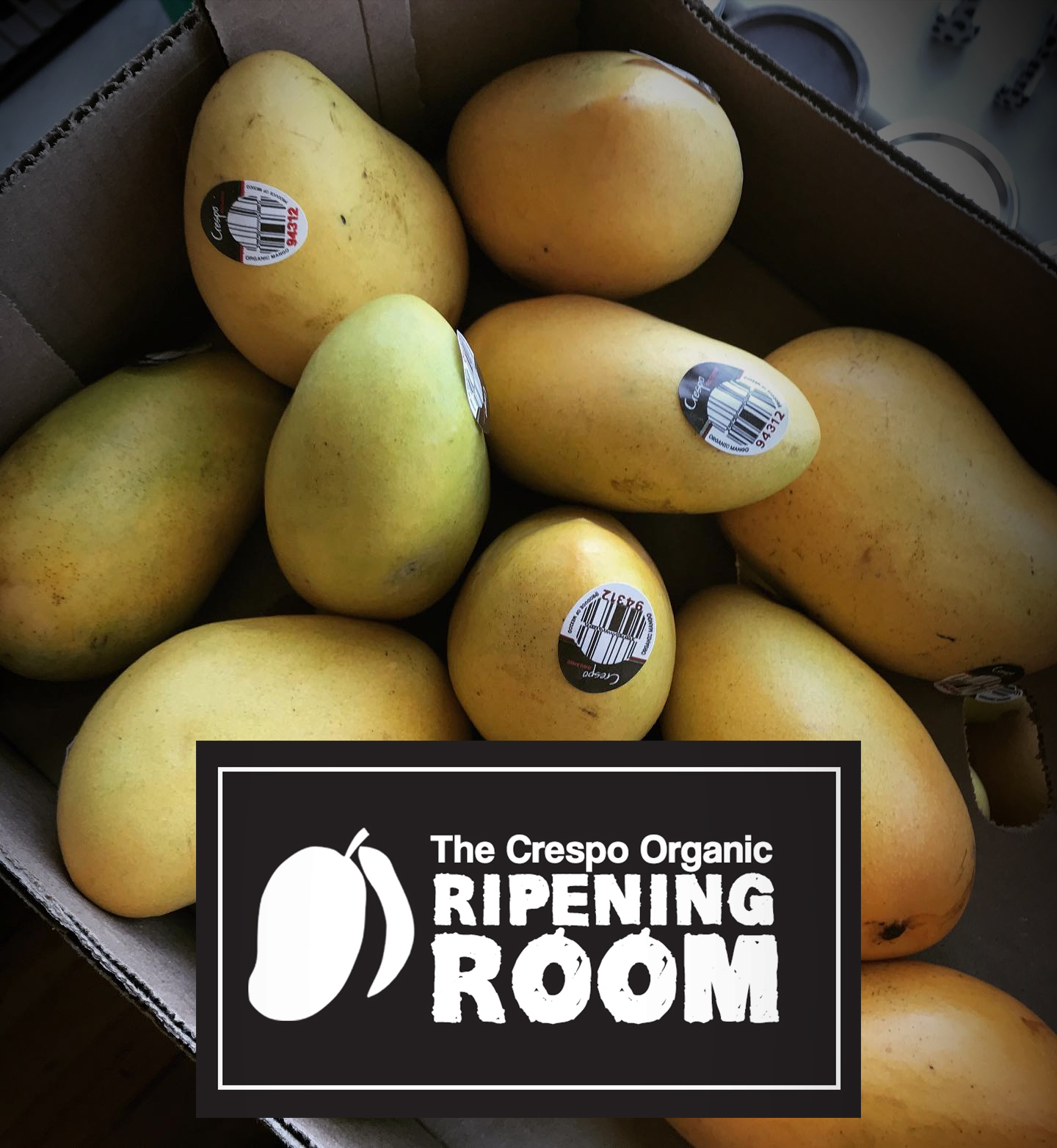
First let me take this opportunity to introduce, The Crespo Organic Ripening Room — a new educational hub that will soon be landing online, in stores, and across social media, designed to teach everyone the science and nuances of mango ripening, an art form that is within all our grasp, especially when we have the information.
The new #RipeningEd campaign covers the full picture — the science of ethylene, cold chain problems, varietal ripening guides, and how to ripen at home. That campaign will continue to unfold for the remainder of the season, with a grand reveal of one of the most genius merchandising items the mango world has ever seen launching right before Summer Mango Mania. But for now — what’s happening in Oaxaca and Chiapas is a perfect real-world lesson in why all of it matters.
The Weather Report
Mexico is HOT right now and I’m not talking about the news. Most of Mexico is reporting higher overall temperatures but temperature patterns across the southern mango-growing zones of Oaxaca and Chiapas are running only slightly outside historical norms — but with mangoes, slight is enough. Small temperature increases, particularly at night, translate directly into accelerated respiration and faster ripening. So far this season, the story here is not the dramatic heat that other regions of Mexico have been battling, but a narrowed diurnal range — overnight lows running warmer than usual and not giving fruit the recovery window it would typically get. Whether March will follow the relentless heat pattern seen elsewhere in Mexico remains to be seen, but it’s something I am watching closely as the season moves forward.
What this means at market is not necessarily a quality concern — it’s a ripening behavior shift. Fruit will begin to arrive moving faster than it has been and this is the normal pattern shift based on weather patterns and mangoes doing exactly what they are made for— ripening.
Here is what the weather data shows for March in the southern region mango growing zones.
Chahuites, Oaxaca — March is historically one of the hottest and driest months of the year in this area. Daytime highs typically run in the mid-to-upper 90s°F, with some days pushing toward 100°F as the dry season peaks. Current forecasts show peak temperatures reaching 103–104°F, running at the high end of or slightly above historical norms. More notable is the diurnal range — the difference between overnight lows and daytime highs. Historical average lows for this period run in the upper 60s°F, but current forecasts show lows of 69–74°F through the coming weeks, continuing the warmer-night pattern that emerged in late February.
Tapachula, Chiapas — March is also one of its warmest and driest months here. Historical average highs run around 88–90°F, with overnight lows historically in the upper 60s°F, around 67–70°F. The same warmer-night pattern observed in February is continuing here as Chiapas moves through its peak harvest window (about 2-5 degrees higher than usual).
Both zones seem to be carrying elevated overnight humidity alongside the warmer overnight temps. That combination — warm + humid nights — is harder on fruit than warm nights alone. It keeps respiration rates elevated while also creating conditions favorable to latent fungal pressure as fruit matures and skin integrity softens. Chahuites in particular, with those extreme daytime swings, is running the most aggressive stress cycle of the two, if I am looking just at the data.
Organic Ataulfos Right Now
Oaxaca Ataulfos are moving into peak harvest with Chiapas close behind. What’s on the tree now is developing fruit moving toward harvest, and as described above, the warmer nights are accelerating that timeline — respiration rates stay elevated around the clock, pushing fruit forward faster than a cooler-night season would. Peak season timing is already a natural accelerator. Warmer nights can compound it.
Fruit is mostly arriving with strong pressure — 20-30 lbs and above — so these are not fragile, but they are alert. Some orchards are showing pockets of lower pressure on arrival, which is normal variability for this point in the season and not a cause for concern. This is peak-season behavior, not a weather anomaly. They will move through the color and softness window faster than early-season fruit did and will respond quickly to any warmth or cold they encounter in the chain. Expect more color on arrival — peak Ataulfo season doing exactly what it should. Sizing is running heavy in the 16s right now, but all sizes are available.
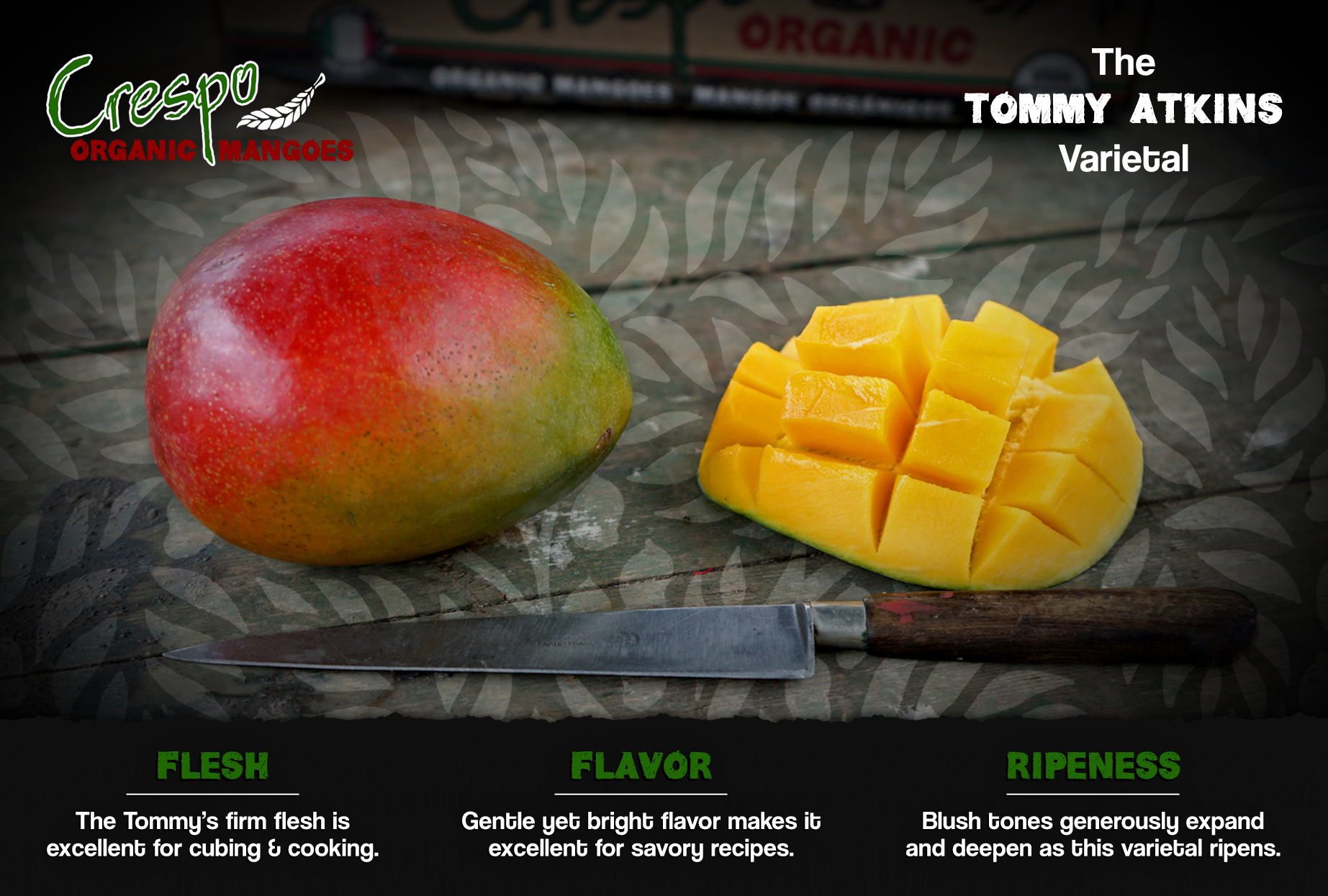
Tommy Atkins volume is building out of both regions, landing mostly on 8/9/10 count sizing. Good quality and excellent flavor. The Brix on the Tommy is currnetl is higher at harvest and border lands than I have seen in a while, which means pressure is less than rock hard which is good for all of us, especially consumers. Pricing remains stable and moving as it should as Peru exits the organic market with quality issues.
Heat = Flavor
Tommy Atkins grown in Oaxaca and Chiapas benefits from proximity to the equator — more direct sun, more consistent heat, and a longer slow build of sugar that northern growing regions can’t replicate to the same intensity. They are now starting to get exceptionally sweet. If Tommy Atkins has ever disappointed you, Oaxaca-grown fruit in peak season is worth a second look. It is by far my personal favorite flavor of the Mexican season and one I think deserves more accolades for its ease of use in cooking and culinary endeavors that require it to be sliced and cubed.
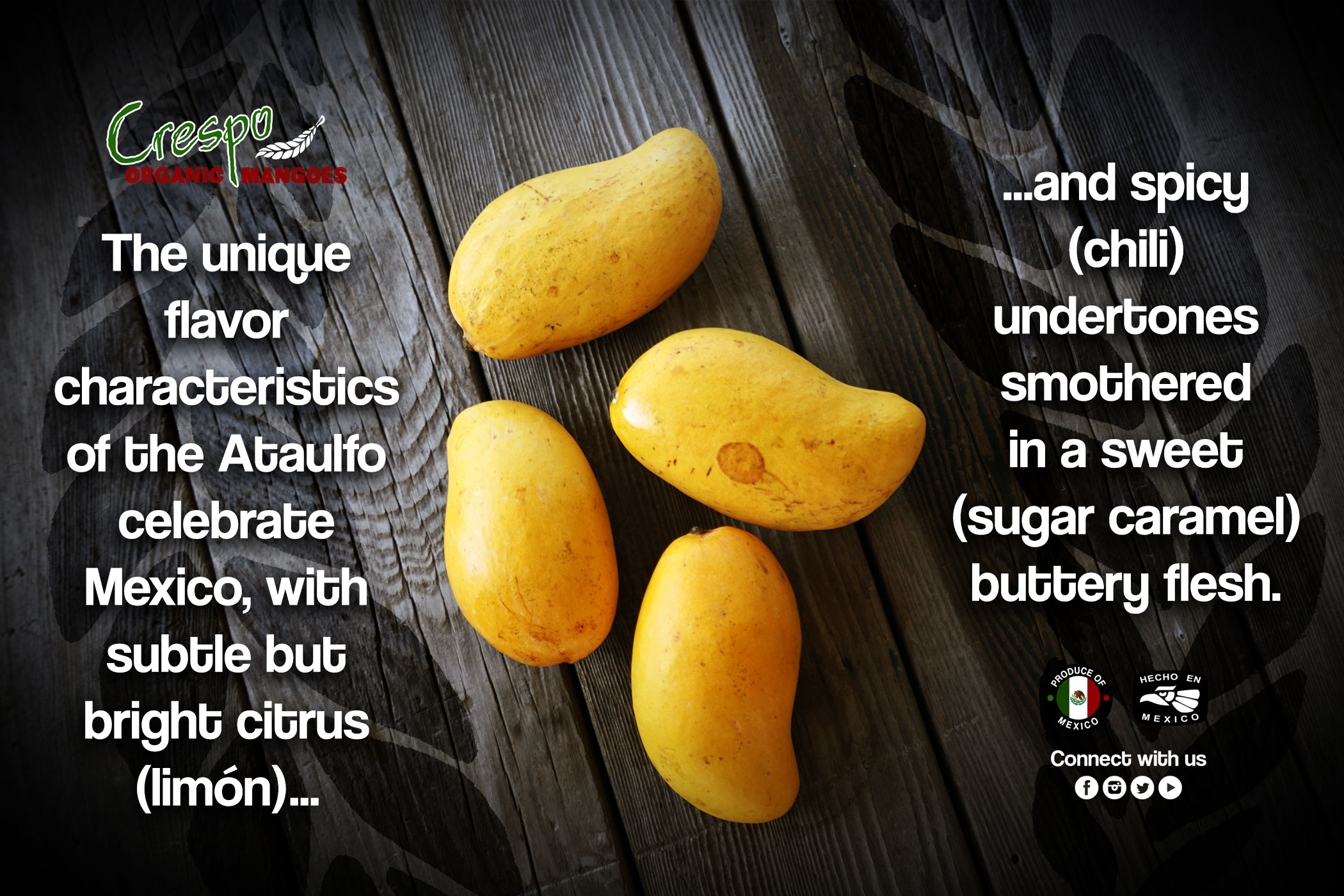
The Ataulfos are about to tell their peak-intense flavor-filled story as well — peak season isn’t just accelerating ripening, it’s deepening it, concentrating the sugar-caramel complexity that makes a peak-season Ataulfo unlike anything earlier in the season. This is exactly what The Crespo Organic Ripening Room is built around — ripening is not just a logistical event, it’s a flavor event.
Ataulfo Ripening 101 — The Science
From orchard to table, every link in the chain either protects the Ataulfo or destroys it — and right now, with peak season heat built into every piece of fruit leaving Oaxaca, there is about to be less margin for error. The Ataulfo is one of the most ethylene-sensitive mangoes in the Mexican lineup (outside Crespo’s Mango Queen specialty line) and its ethylene is about to spike.
Ethylene is the natural gas mangoes produce to trigger ripening — when fruit warms up, ethylene production spikes. When it cools back down rapidly, the process doesn’t pause cleanly. The ethylene already released has done its work and the cellular changes it triggered don’t reverse. Each warm cycle pushes the Ataulfo forward. Repeated cycling through the chain means the fruit moves in uneven, uncontrolled bursts rather than the steady, creamy progression this variety is known for.
Temperature swings — especially exposure to cold below 50°F — cause chilling injury at the cellular level. The pectin and membrane structures that give a perfect Ataulfo its signature custard texture break down, and flesh becomes watery or mealy instead. That’s irreversible. Heat accelerates respiration too, burning through the sugars and organic acids that create the Ataulfo’s sugar-caramel complexity. Every unnecessary temperature spike — warm or cold — in the chain is burning flavor and shelf life simultaneously. The Ataulfo that looked fine at the border and arrives at retail compromised didn’t fail, the chain did. The Weekly Mango Conditions Report, we will roll out soon will aim to help us all make better decisions based on the realities of the trees and the fruit as The Ripening Room #MangoDistribturEd will continue to unpack the deeper science behind all of this in the coming weeks — stay tuned.
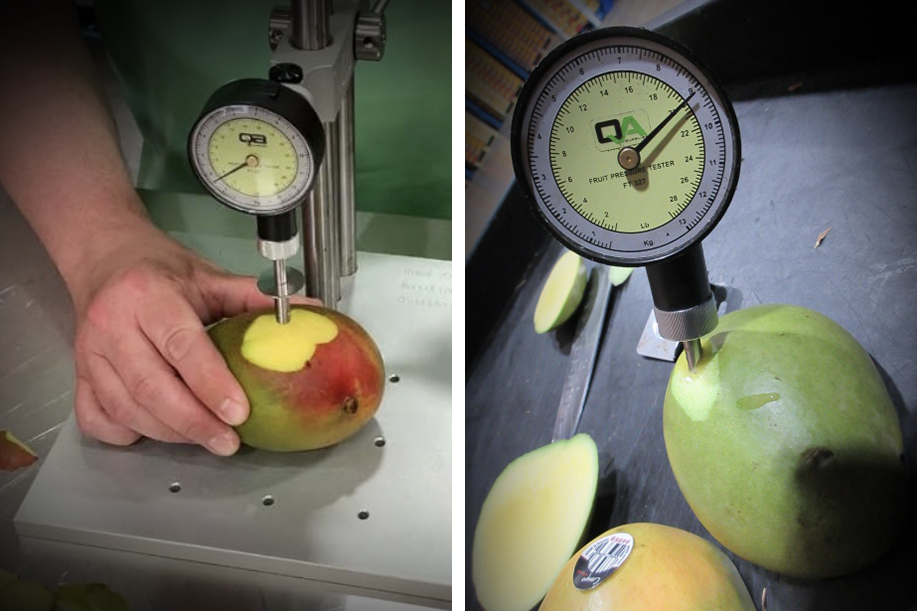
Use The Tools (Penetrometer)
The mango supply chain runs on visual cues — color, size, cosmetics — but color alone does not tell you where a mango is in its ripening cycle, especially with Ataulfo. A penetrometer measures the force required to push a probe into fruit flesh, giving an objective, quantitative reading of firmness in lbs of force or Newtons. The FT327 is the standard tool in the mango trade. For mangoes, the protocol calls for a 5/16″ (8mm) tip, testing the exposed flesh on both cheeks with the skin removed, and averaging the two readings. Mounting the FT327 on a manual test stand produces more precise and reproducible results than handheld use, because it controls the speed, angle, and depth of penetration — the three variables that affect accuracy. The higher the number, the firmer (less ripe) the fruit.
Pressure vs Color
Color misleads. External skin color is consistently flagged across industry sources as an unreliable ripeness indicator. Red blush on Tommy Atkins is sun exposure, not ripeness. Keitt stays green when fully ripe. Ataulfo shifts to golden yellow but can’t be judged on color alone. Nam Dok Mai turns golden yellow at peak ripeness but drops firmness so rapidly once it crosses the maturity threshold that color gives you almost no useful lead time. Mallika ripens to yellow-orange but likewise — color tells you nothing precise about where it sits in the ripening curve.
Internal flesh color near the seed is the best visual indicator — but that requires cutting the fruit. Firmness measured by penetrometer gives a real-time, objective, non-destructive read without sacrificing a single mango. Research documents that firmness stays relatively stable from immature through mature stages across varieties, then drops rapidly as ripening accelerates — making the penetrometer the precise tool for catching the transfer window before quality is lost. For fibreless, high-Brix varieties like Nam Dok Mai and Mallika, where clean buttery texture is a defining quality marker, that window is especially tight and especially unforgiving.

Best Ataulfo Handling Practices
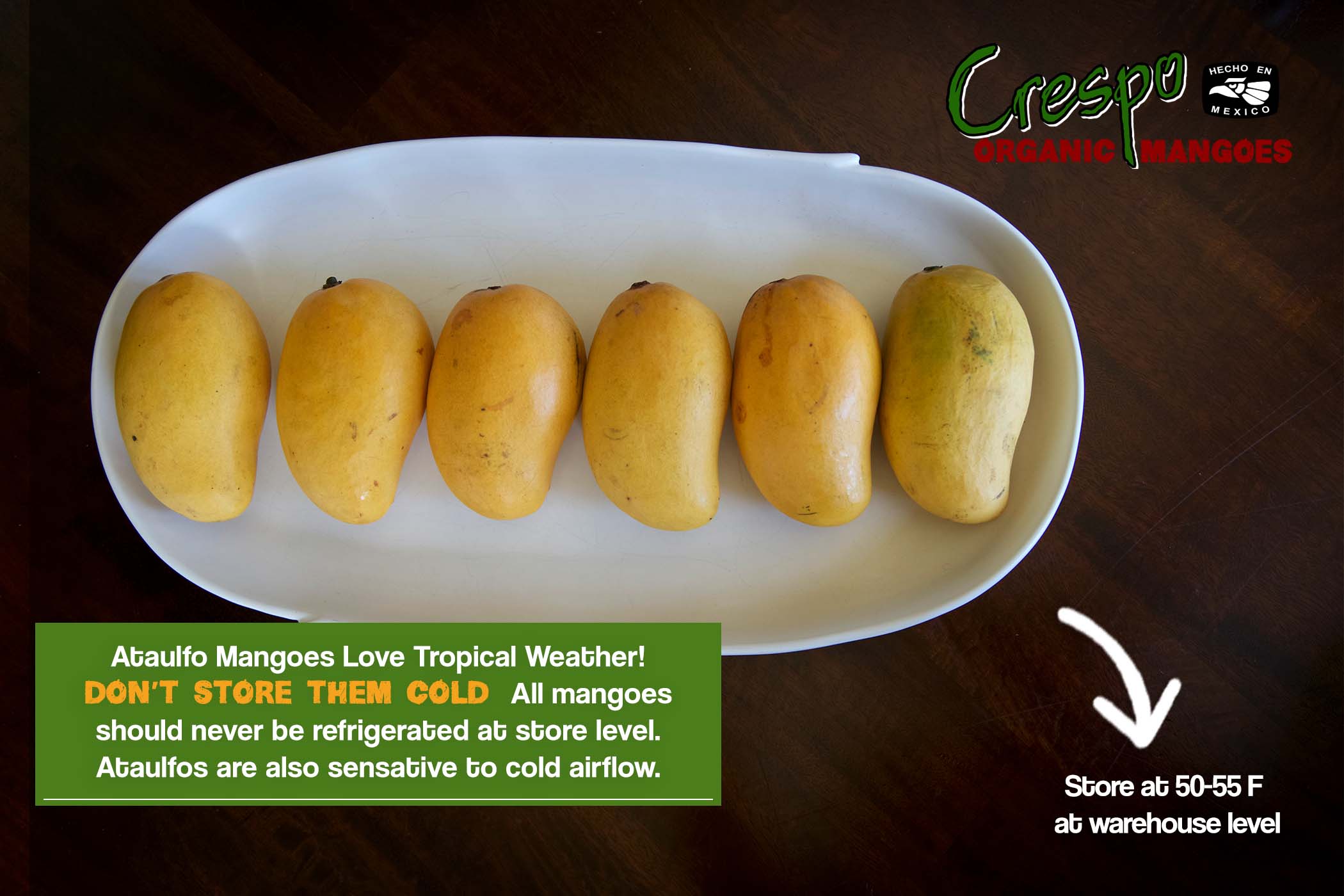
A Reminder: Ship on warm trucks — never cold. Below 50°F will stress and damage Ataulfos. Store at warehouse level in a warmer room around 50°F. Never refrigerate at store level. At peak season with fruit breaking faster and field heat already built in, these are must do’s for superior quality. The best defense against ripening pressure is velocity — and the organic Ataulfo has the consumer demand to support it. These are one of the most beloved mangoes in the market. Organic shoppers know them, seek them out, and come back for them. Aggressive pricing and big displays move them fast, and fast is exactly what you want right now. Don’t be timid with the merchandising — when the price is right, Ataulfos fly. Build displays that match peak season ambition, replenish 2–3 times per week, and let the fruit do the rest.
Full handling guidance, marketing assets, and display resources at It Takes a Village.