
Does the Weather Write the Season?
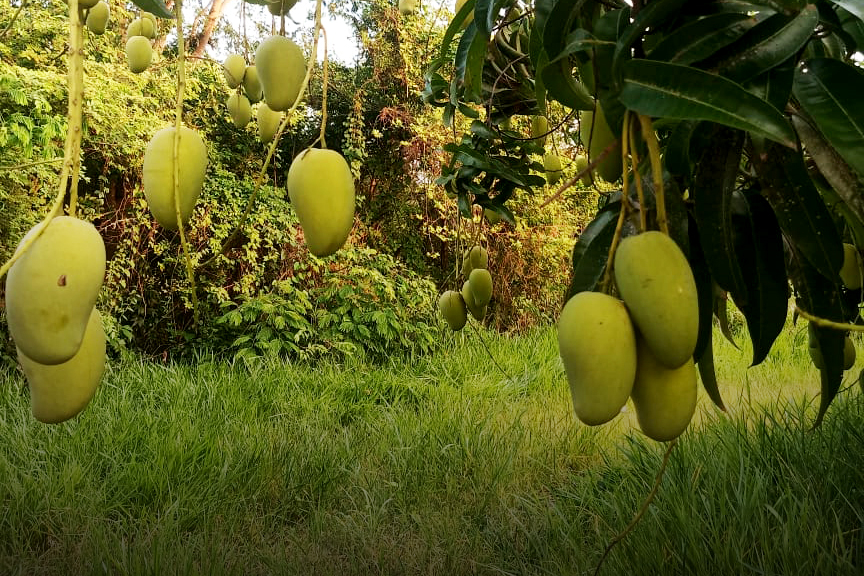
The Mexican mango season is underway in southern Oaxaca, but it has actually barely gotten started as a whole — Ataulfo and Tommy Atkins are both moving into the market, and depending on how many orchards or where your packhouse might be, exporters are either rolling in mangoes or just getting started.
Crespo Organic has two packhouses now open with the third slated to open soon. Good organic volumes are rolling in, quality has been pretty decent, and the eating experience, from what I am hearing, is good too. More fruit is coming ready and more packhouses are getting ready to open in the Chiapas area. As a whole, the southern region will be revving in full by mid-March.
There are some gaps emerging tied to bloom and formation stage issues from the pre-bloom weather — when heavy rains brought a lot of thrips into the orchards. That is not surprising, as I mentioned in earlier CROP REPORTS but generally things feel like they are working and will continue to work. Most growers expect the southern season to be much like the last few — successful, difficult, and really hard to predict — with fruit readiness being the most unpredictable aspect — volumes could play out mainly in specific sizing constraints, as orchards seem to have varying sizes, some running large and some small. Demand pressure on specific sizing could be problematic if not managed well on the sales and distribution side — or as I always comment, some flexibility on size is key, especially for Ataulfo.
Everyone agrees that prediction is the hardest part. What everyone also agrees on — though it gets talked about in pieces rather than as one picture — is that rising costs, politics, exchange rate pressure, and increased demand are all colliding at once. That collision keeps everything pressurized and clouds the flow of clear information.
Peru is still shipping fruit at lower prices than they have carried most of the season, adding noise. When Peruvian volume is active and priced aggressively during overlap, it is harder to get a clear read on Mexico. But Peru’s quality is quickly deteriorating — outside and internal — and there is an immediate shift in interest to Mexico because of it. This is good for increasing volume, as all Mexican exporters and sellers want to do, but this week, as I hear about Mexican producers of other fruits struggling with weather patterns, I think the mango world should be more fixated on weather too.
I keep coming back to climate change and unpredictable weather patterns. Despite the surge in demand, the weather isn’t following any predictable script and it’s affecting each varietal differently. This gives me trepidation.
To understand what mangoes might have in store, I look at everything else growing in the same Mexican dirt, across the samegeogrpahic corridors. The oranges in Sonora (or domestically in Veracruz) . The tomatoes in Sinaloa. The limes in Michoacán and Oaxaca. Vegetables in Guaymas or Baja Mexico. Every one of these crops is telling the same story — erratic weather making volume, quality, and timing impossible to predict. The weather is causing significant quality problems in other commodities as we speak and the Mexican mango season runs through the same geography, the same climate patterns, the same water systems, and the same pest pressures. What’s hitting those commodities will hit mangoes, any I guess my question to the industry, is shouldn’t we be more concerned?
Two Extremes, One Season
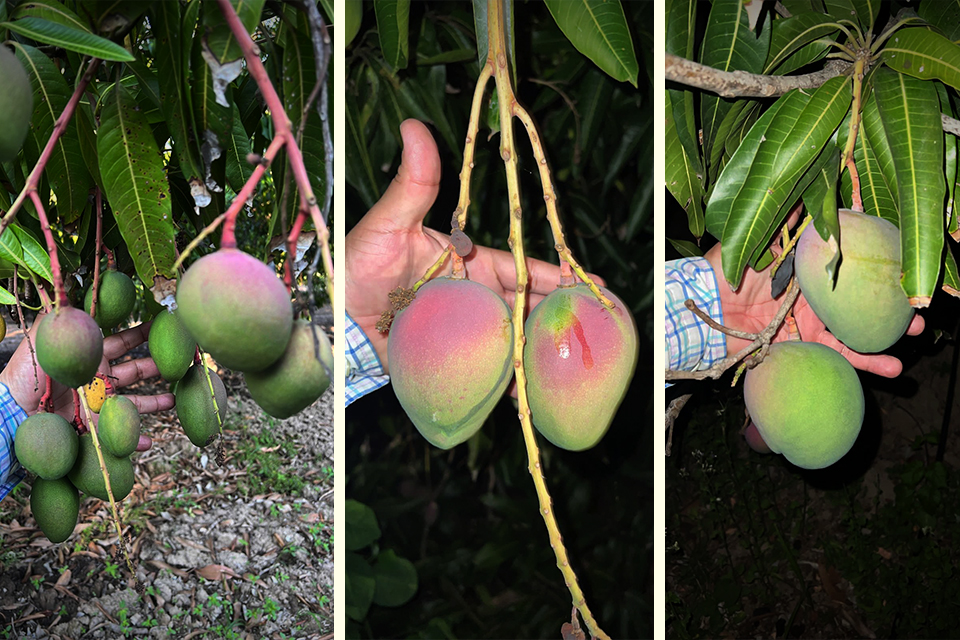
Southern Mexico — Chiapas, Oaxaca, Guerrero — entered this season waterlogged. A heavy rainy season capped by catastrophic October storms saturated soils, drove explosive vegetative growth, and created breeding conditions for thrips and fungal pressure heading into bloom. Reduced bloom and fruit set, panicle scarring, and volume concerns will likely result and won’t be fully visible until picking and packing time.
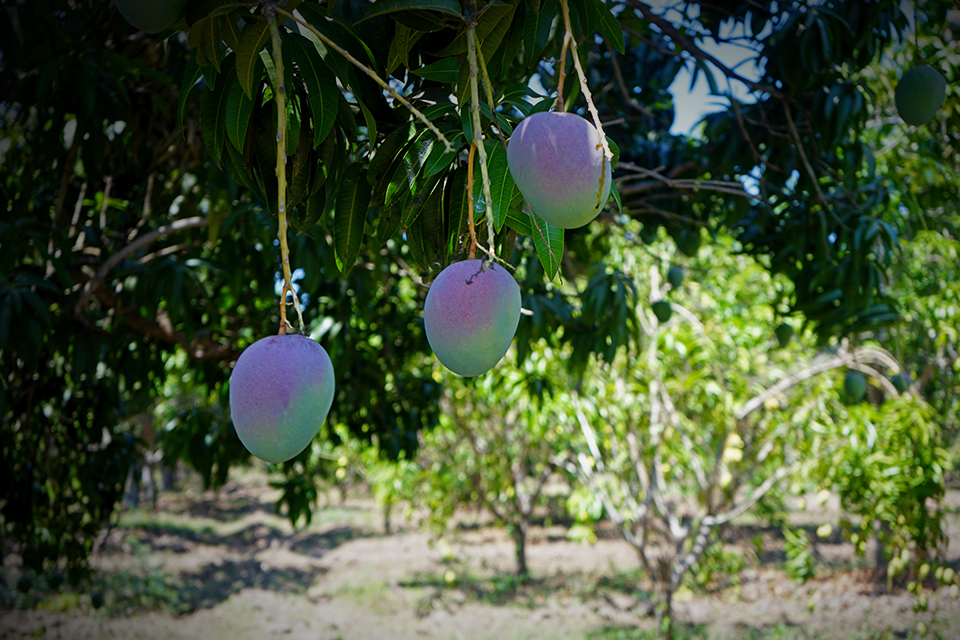
Northern Mexico — Sinaloa, Nayarit, Michoacán — is dealing with the opposite. Record-breaking heat has arrived weeks ahead of schedule. CONAGUA’s February 7 forecast posted maximums of 35–40°C (95–104°F) across Sinaloa and the Guerrero coast, with 30–35°C (86–95°F) across Nayarit, Michoacán, and Colima. For Sinaloa, where historical February averages sit around 26–27°C (79–81°F), that’s 8–13°C above normal. In Pungarabato, Guerrero, the mercury hit 41.3°C (106.3°F) during the last week of January — breaking a historical record. In winter.
An anticyclonic circulation at mid-levels is driving stable conditions and a steady climb in daytime temperatures across most of the country. Meanwhile, a simultaneous cyclonic system in the northwest is producing scattered showers in Sinaloa and Nayarit — warmth and moisture arriving together in a pattern that doesn’t fit the usual playbook.
What the Models Say
Most weather models agree that temperatures will continue rising from late February onward. March is projected to register averages above 29.8°C (85.6°F) — a thermal pattern Mexican meteorological sources say has not been seen at this magnitude in almost ten years. The Servicio Meteorológico Nacional identifies Sinaloa, Michoacán, Guerrero, and Nayarit as the Pacific states most likely to regularly surpass 40°C (104°F) as heat intensifies through April and May.
La Niña conditions are present but weakening, with a transition to ENSO-neutral forecast through March. Multi-model ensembles point toward above-normal land surface temperatures and below-normal rainfall across southern North America. The trajectory is toward more heat and less water.
Why This Matters for Mangoes
I look to the north with a lot of questions. Heat at this level and this early isn’t ideal. When temperatures push consistently above 35°C (95°F) during bloom, pollen viability drops, fruit set declines, and the tree begins aborting young fruit as a stress response. Fruit that holds on may develop smaller because cell division is reduced under heat and water deficit. Sugar and acid balance can shift, producing fruit that tests mature but eats flat. Internal disorders — spongy tissue, soft nose — form invisibly during development and reveal themselves only after harvest.
Heat also compresses timelines. Mango development is driven by accumulated heat units. When temperatures run this far above normal, fruit matures faster — creating packing house compression, shorter windows to pick and process, and competition with other commodities for labor and cold chain capacity.
In the south, where the problem was rain rather than heat, the sequence is what makes it dangerous. Waterlogged soils weakened root systems. Calcium that didn’t reach developing fruit during early cell division means weaker cell walls. Now that heat is arriving earlier and harder than projected, every vulnerability the rain introduced gets amplified. The stress is not additive. It’s multiplicative. What does this mean for these mangoes a month from now, especially as they are driven around in supply chains that are way too cold?
The Honest Read
Everyone in the supply chain is trying to read these patterns and make decisions — on volume commitments, pricing, logistics, promotional timing. And the patterns are not cooperating. Sinaloa hitting 35–40°C (95–104°F) in early February when the historical average is 26–27°C (79–81°F) is not a minor deviation. That’s a different climate operating in the same geography.
Meanwhile, demand and costs are rising together — labor, packaging, logistics, cold chain, compliance. The pressure to commit early to programs and pricing runs headfirst into weather that keeps rewriting the timeline. Growers are absorbing unpredictable yields. Packers and shippers are absorbing compressed windows and quality variability. Buyers are absorbing uncertainty on volume and delivery timing.
The forecast, outside of the fact that Mexico has a lot of mangoes, this season remains very difficult to predict and I can’t find as much clarity as I’d like or as I usually would. The best I can do is watch in real time, ask questions, and lean on the patterns I see in the unpredictability. The best the market can do is remain open and flexible, knowing the weather is the one thing we cannot control. Mexico grows mangoes across nearly 10 months and multiple climate zones. That geographic spread is the industry’s greatest buffer. But when every zone is dealing with erratic conditions simultaneously, the buffer gets thinner.
My takeaway is not necessarily negative — weather has always been something we contend with — but the shifting patterns colliding with a commodity facing increasingly unprecedented demand, in a world rife with economic and political pressures, make me think weather is really important to watch, especially if other fruits and vegetables are telling us something we need to hear.