2026 Mexican Crop Talk
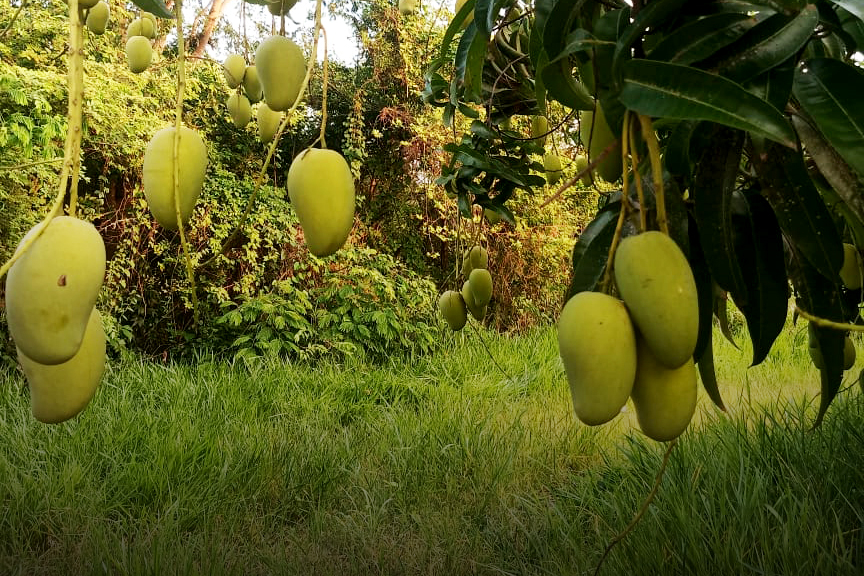
Timing is becoming clearer, and the general start dates for hot water bath packhouses in Oaxaca have shifted slightly. The majority of packhouses are now slated to open in the last week of January, with a few—typically two that historically start early—opening the week prior.
I will offer more detail toward the end of this week as boots on the ground begin assessing conditions with firmer information, now that operations are restarting after the Christmas and New Year break, a period when activity in Mexico largely comes to a full halt outside of family and holiday obligations.
What I can report is that fruit readiness can now be gauged easier and fruit set from later blooms is becoming easier to predict, as are early indicators of quality and size. Sizing is expected to start in the medium range, with the potential to run larger due to the significant off-season rains. Quality, in my experience, still needs time. You never truly know until fruit is packed, shipped, and moves through the system, but all indications at this stage are positive, or at least in line with last season. I think the important details are still not totally acessible, but will be soon.
The Ataulfo season has already begun in Mexico, with the domestic market now in full swing. Data shows volumes of irradiated fruit (conventional only, as certified organic fruit cannot be irradiated) already moving into the U.S. Once USDA-APHIS approves and certifies the opening of hot water bath packhouses, regular Mexican mango exports to the U.S. can begin, including organic fruit. It is worth remembering that USDA personnel are on site at all hot water bath mango packhouses to inspect, certify, and stamp each lot after treatment, and each facility must be approved for readiness before exports can start. In the southern growing and processing regions of Oaxaca and Chiapas, where infrastructure is limited, this process is neither quick nor simple.
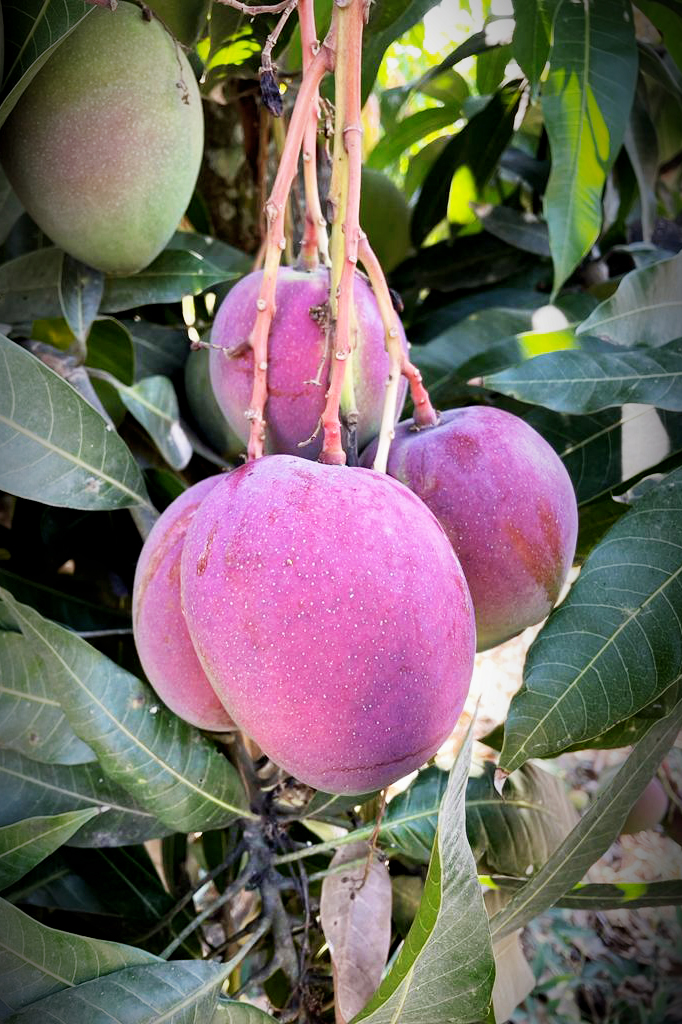
Tommy Atkins production for the U.S. market is currently estimated to begin shipping around February 10, initially in limited and building volumes, this is a moving target which will get clearer in the next 2 weeks.
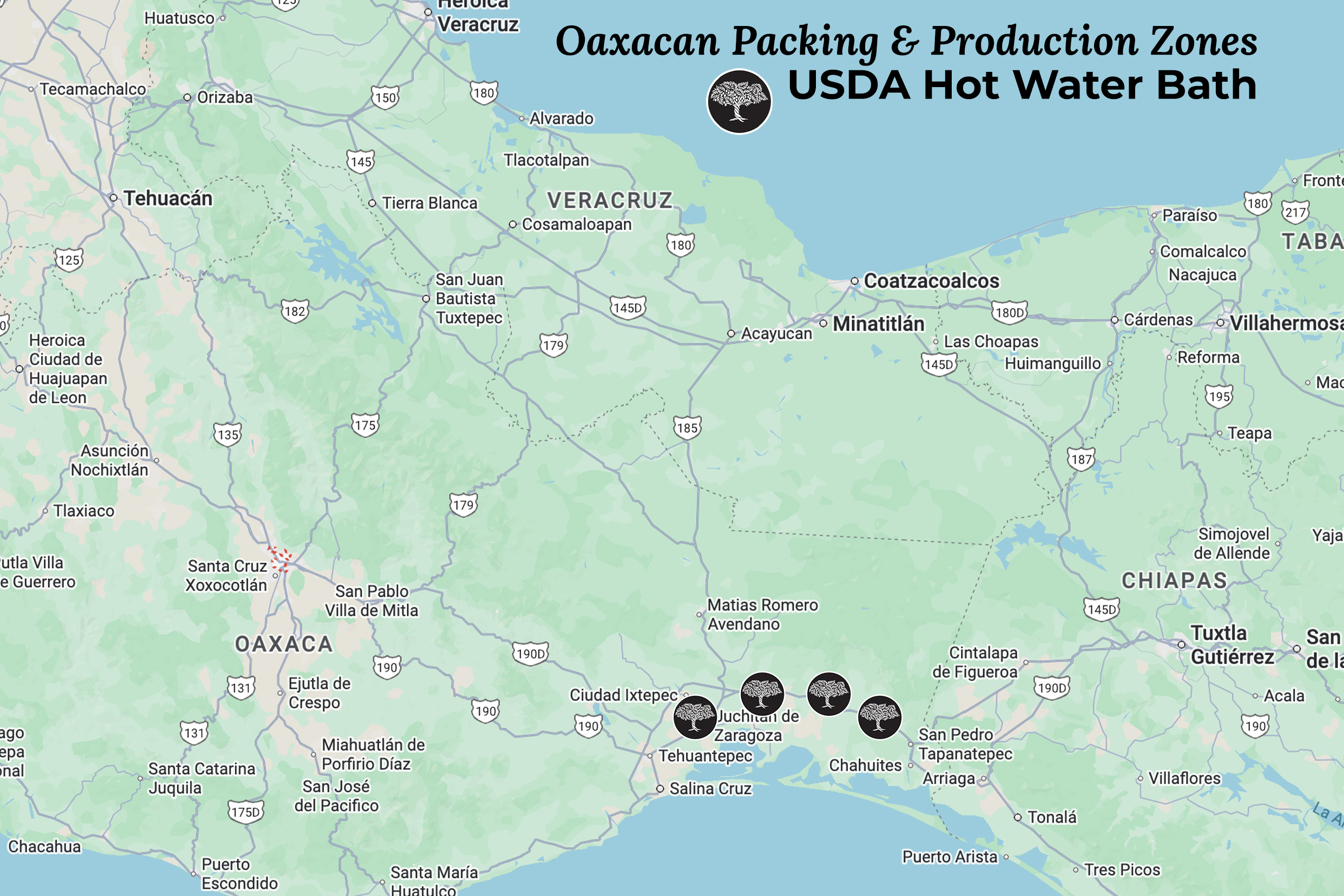
While mangoes are grown all over Oaxaca, the USDA export packhouses are anchored in the eastern Isthmus of Tehuantepec, with more than a dozen USDA hot water bath packhouses located in and around Chahuites and San Pedro Tapanatepec. These plants are fed almost entirely by nearby production from around the Isthmus, primarily from Chahuites, San Pedro Tapanatepec, Reforma de Pineda, Ixhuatán, and Santo Domingo Zanatepec.
In Chiapas, U.S. export mango packing and hot water bath infrastructure is concentrated in the Soconusco corridor, near the Guatemala border, centered around Tapachula and extending north and west through Huixtla and surrounding municipalities. This area anchors USDA export compliance, inspections, and treatment for Chiapas mangoes.
The primary producing zones feeding this export system are the lowland and coastal orchards of Soconusco, including areas around Tapachula, Tuxtla Chico, Metapa, Huehuetán, Huixtla, and Villa Comaltitlán. These orchards benefit from early heat accumulation, high humidity, and fertile soils, making Chiapas one of Mexico’s earliest and most consistent mango-producing states, especially when it comes to Mexico’s premier Ataulfo mango. There are several micro regions within this area that produce much later in the season as well, making it one of the most important regions for direct-trade producers who can utilize the early and late fruit.
Logistics in both regions are expected to remain challenging, as infrastructure in southern Mexico continues to be limited, particularly in these particular rural and southern growing and packaging regions. A lack of consistent backhaul opportunities, combined with an overall shortage of trucking, uneven road conditions outside major highways, and labor constraints within the transport sector, keeps freight movement tight, expensive, and difficult to secure. These structural realities are a normal part of operating in the south and continue to influence costs, timing, and flexibility throughout the season.
Other than that, it is worth noting that the peso–dollar exchange rate and the current weakening of the U.S. dollar against the peso will continue to put pressure on the system and should be considered alongside rising production costs inside Mexico, including labor, fuel, energy, and transportation. Together, these factors are tightening margins across the mango supply chain as growers and exporters head into the 20206 season.

Meanwhile the US is still awaiting the peak of Peru to arrive with a lot of emptiness in the market especially felt in the organic category. I’ll try and get more details on Peru as well this week.