Browsing Category
Farm
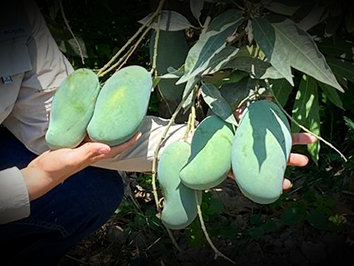
An Indian Varietal Grown In Mexico Thanks to Jorge Crespo (The Crespo Mango Man) and his passion for all things new, including new growing challenges, as well as his desire to expand the family’s expertise always being forward thinking (Jorge is much like his father Roberto Crespo Fitch), RCF Distributors has several new specialty varietals that are being introduced in seasons ahead. The Mallika mango is Jorge’s second specialty varietal, after the Keiw Savoy ( Thai Sweet Green Mango). The Mallika is a special mango that has caught the attention of mango loves with its sweeter, more nuanced tropical exotic flavor.
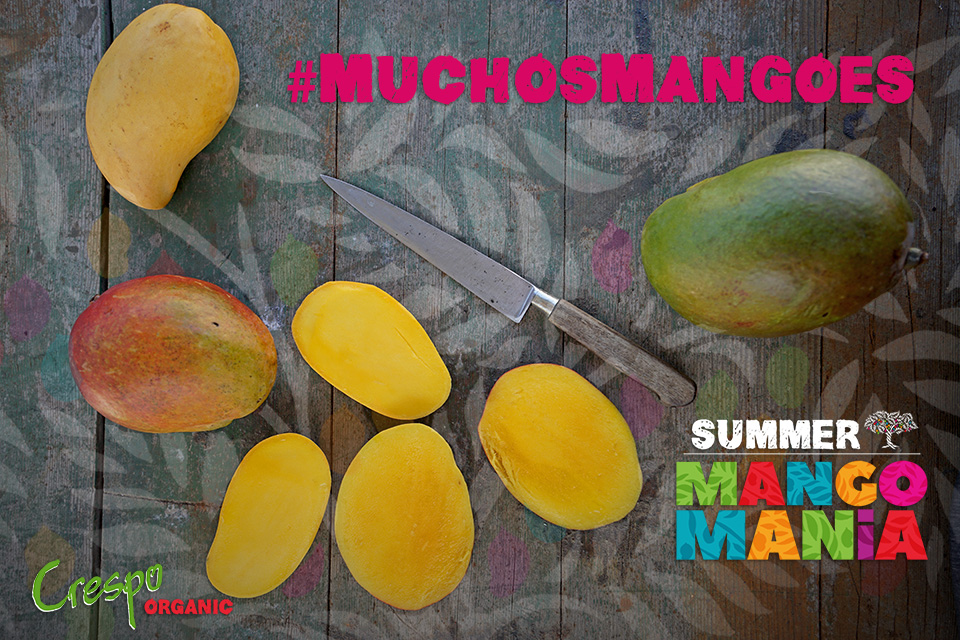
Crespo mango expertise bridges transition into Summer Mango Mania I’ve been selling organic mangoes for a long time and, as so many of us forget, the greatest season-long program success happens when you nail the transitions. It’s the performance during the transition that dictates what stores have fruit and at what price. Just like in music, those connecting notes, the transitions is what leads you to the next phase of the whole. We take the transitions seriously, we get creative and we utilize the partnerships we forget with customers, making it work. Clear communication, more than anything is pivotal for any transitional success, in particular when there are volume supply or quality issues at play. The direct relationships to customers and the nimble work we do together, with the trust of the consumers who fuel our program, make the transitions easier to maneuver through so we can build and grow successful organic Mexican mango programs…. This is what we are known for. The Crespo’s fully and vertically integrated supply chain and direct-trade selling system is what makes them the mango experts. It’s because of that expertise we will not skip a beat in the final days of the great mango transition, which is when a regional production shift from southern Oaxaca & Chiapas to Northern Nayarit and Sinaloa happens.
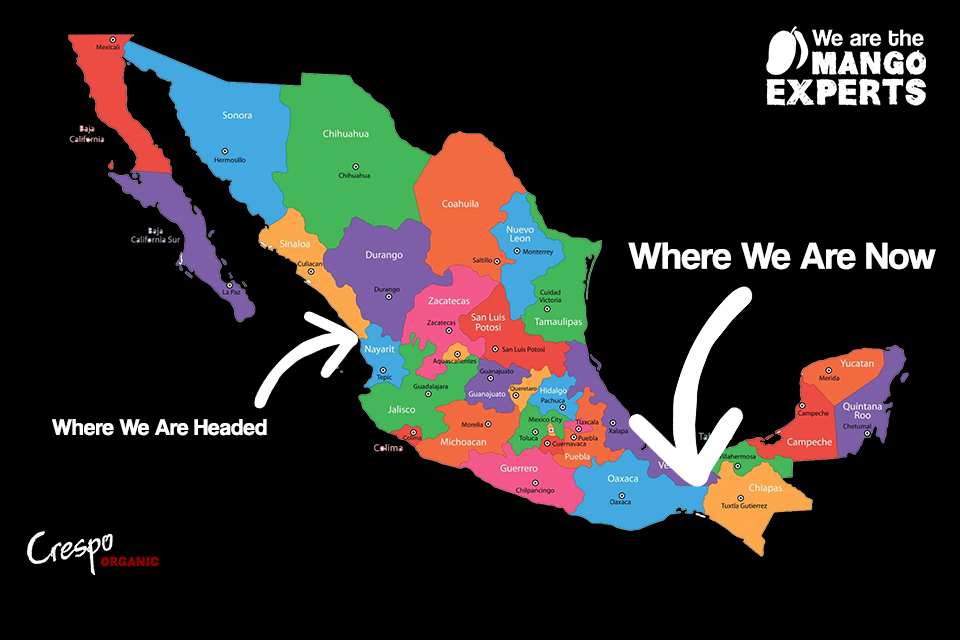
Will Oaxaca, Chiapas, and Nayarit line up for a smooth transition? The nature of transition is tricky. Shifting mango production from the southern Mexican regions to the northern ones is often unpredictable and complex. This year we move into with a great deal of positivity and yet a tinge of trepidation. I think the trepidation is more implanted into all of us because of the last several months or utter unpredictability that resulted in many challenges for the industry. Transitioning mango production from southern to northern regions in Mexico is often a tricky and complex process. As we embark on this year’s transition, we are filled with positivity, yet there is also a sense of trepidation. The challenges of the past few months have left their mark on the industry, and we all carry a certain level of uncertainty with us. Last year the transition was brutal, as I reported here- Under The Mango Tree. We managed but it wasn’t easy or pretty. This year we get a break.
Boasting the most efficient and modern mango pack house around Disclaimer: This is a boastful and prideful post about a packing house that I truly believe in. I’m one of a few globally well-traveled industry folks with an extremely diverse make up of commodities, markets, cultures and systems. I have seen a lot of packing houses and “sheds” in my travels and none like this one. Boasting this facility and the Crespo family is the natural outcome of my true beliefs. – – – – – – – – – – – – – – – Empaque Don Jorge (El Original) located in the Crespo’s hometown of Rosario, Sinaloa is now open for the season. It opens, with immediate plans to expand capacity beyond its extraordinary current amplitude. 5 additional stainless steal hot water tanks, 2 additional packing lines and 1 additional washing line are just a few of the augmentations that will further expand Latin America’s largest hydrothermal mango packhouse’s prowess. It’s opening couldn’t be more needed as we move deeper into this wild and crazy Mexican mango season! Read my latest CROP REPORT for more crop and season expectations/details. For this post, I boast!!
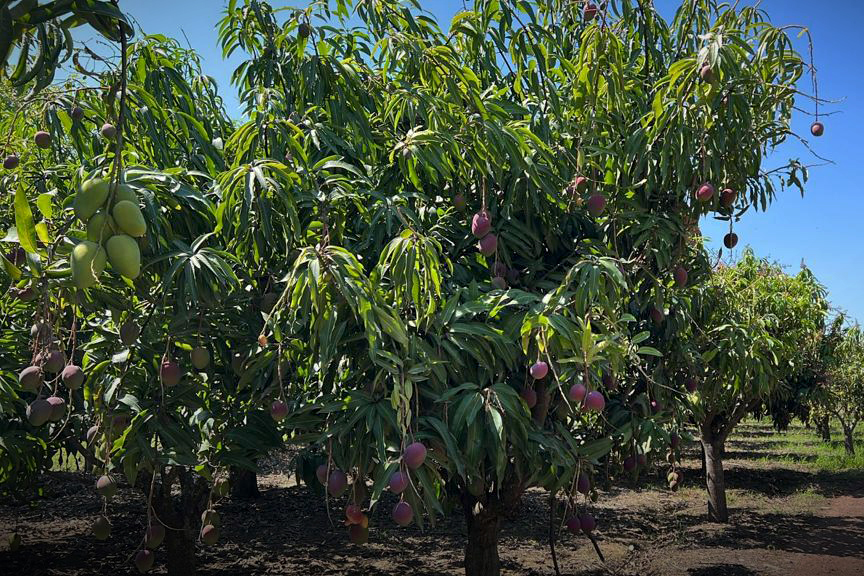
The lack of small fruit is real and size Up-ortunities are too! There is a significant and serious lack of small fruit coming out of mango orchards in the south (Chiapas & Oaxaca) right now. As a result, there is a lot of confusion and panic in the market. This is mostly because pricing remains higher than average and bigger fruit and higher prices mean more expensive pieces of fruit. We’ve received new intel, including photos and video from our Crespo boots on the ground or in this case Roberto Crespo. His information has been coming in the last several weeks as we’ve been trying to better access the small fruit situation. It’s been coordinated and agreed upon by all Crespo’s as well as several other large and medium sized conventional and organic producers in the south. It all true, the small fruit shortage!

Uncovering the facts about Ataulfo mango Latex staining & sap injury This article was originally posted on Under the Mango Tree in February of 2017 and has been updated here. Over the years, I really thought I understood the major problems affecting the “king of fruits,” specifically the varietals and those from the countries I worked with. Since I have traveled to orchards on multiple continents to examine the fruit and its “afflictions du jour,” I thought I had the facts straight on mango quality. Alas, since I met the Crespo family, I have come to discover that I had barely scratched the surface when it came to mango quality issues. Like most everyone in the industry, I had to sift through a lot of misinformation about the quality of mangoes, but I tend to ask a lot of questions. And because I am me, I share the information I find. Under The Mango Tree’s goal has always been to get more accurate mango information to buyers, industry folks, and consumers. As we all struggle to compete in the complex agriculture world, this blog has been my attempt at being part of the solution. Talking about commodity imperfections is an important part of that process and an important part of commodity education. Today I want to talk and share about the dark marks we see on many of the Ataulfo mangoes from time to time and most often from the ones that hail from the southern regions: Chiapas and Oaxaca. The good news in this particular affliction/imperfection is, that the mangoes ripen through the aesthetic imperfections, that tend to be more predominant when at the greener stage (when most of you receive the product), rather nicely and turn golden yellow without many blemishes (when the consumers see it). Harvesting and packhouse…